Freemasonry

| Part of a series on |
| Freemasonry |
|---|
 |
Freemasonry (sometimes historically written as Free-Masonry)[1][2][3] comprises a group of fraternal organisations that trace their origins to the medieval guilds of stonemasons. It is commonly regarded as one of the oldest surviving secular fraternal traditions, with documentary and ritual precedents dating to the late Middle Ages.[4] Its activities generally combine ritual, moral instruction, fellowship and charitable work.
Modern Freemasonry encompasses several traditions. These are commonly grouped into three broad forms:
- Anglo-American Freemasonry,[5][6] whose constituent bodies generally require a belief in a supreme being, admit men only, prohibit political and religious debate during lodge meetings, and require a Volume of Sacred Law—such as the Bible, Quran or another religious text—to be open while the lodge is at work.
- Continental or Liberal Freemasonry,[7][8] whose organisations may dispense with requirements concerning religious belief and may permit political or philosophical discussion.
- Women's and mixed-gender Freemasonry,[9][10] which includes women-only organisations, such as the Order of Women Freemasons and the Honourable Fraternity of Ancient Freemasons, and mixed-gender bodies such as Le Droit Humain and Universal Co-Masonry. These organisations may follow either more conservative or more liberal approaches, depending on their governing body.
Bodies within each tradition may describe themselves as regular and may regard organisations outside their own systems of recognition as irregular.[11] The basic local unit of Freemasonry is the lodge. Lodges are usually governed at a regional or national level by a Grand Lodge or Grand Orient. No single worldwide authority governs Freemasonry, and each Grand Lodge or Grand Orient is autonomous. Relations between jurisdictions depend upon mutual recognition.
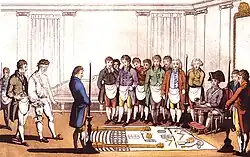
The three principal degrees of Craft Freemasonry correspond to the grades of the medieval craft guild: Entered Apprentice, Fellow Craft[12][13] and Master Mason. Candidates are progressively instructed in Masonic symbolism and entrusted with signs, words and grips used to indicate the degrees they have received. The ceremonies combine allegorical morality plays with formal lectures.
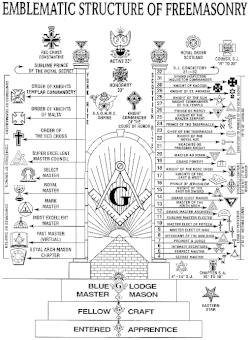
Members of the Craft degrees are known as Free-Masons,[14] Freemasons or Masons. After receiving the three Craft degrees, a Master Mason may become eligible to join various concordant or appendant bodies that confer additional degrees. These organisations are usually administered separately from the Grand Lodges that govern Craft Freemasonry, and their structures vary by locality and jurisdiction. Some additional Masonic organisations require prospective members to hold the degree of Master Mason.
Throughout its history, Freemasonry has attracted religious, moral and political opposition. The Catholic Church, some Protestant denominations and several Islamic governments or organisations have opposed or prohibited Masonic membership. Anti-Masonic movements have also drawn upon antisemitism and conspiracy theories,[15][16] and Freemasons have been persecuted by a number of authoritarian regimes.[17][18]
Masonic lodge

The Masonic lodge is the basic organisational unit of Freemasonry.[19] The word lodge may refer both to the group of Freemasons who meet together and to the room or building in which they assemble.
Lodge activities and meetings
Masonic lodges meet regularly to conduct administrative, ceremonial, educational, social and charitable activities. Practices vary by jurisdiction, rite and local tradition, although many elements are broadly shared.[20]
In many jurisdictions, an ordinary lodge meeting includes the formal business common to other voluntary associations. This may include approving minutes, electing or balloting on new members, appointing officers, receiving reports, considering correspondence, reviewing accounts and organising social or charitable activities.[21]

Some lodges, rites and jurisdictions regard an opened lodge as a sacred or ceremonial space in which ordinary administrative business should not be conducted.[22] In these traditions, business may be handled before the lodge is formally opened, during a separate meeting or by committees outside the ritual session.[23]

A lodge meeting may include:
- the performance of Masonic ceremonies;
- the conferral of Masonic degrees;[21]
- lectures on Masonic history, philosophy, symbolism or ritual;[24]
- the reading of Masonic papers, sometimes called a piece of architecture or planche, on historical, philosophical, technical or personal subjects;[25]
- philosophical discussion;[26]
- research and educational presentations;
- the sharing of personal Masonic experiences;[27] and
- demonstrations of proficiency required before advancement to another degree.[28]
After the meeting, members may attend a formal dinner known as an agape[29] or festive board, which may include ceremonial toasts and songs.[30] Meetings are commonly held in a Masonic hall or temple, although other venues may be used.
Much of Masonic ritual consists of degree ceremonies. A candidate is first initiated as an Entered Apprentice, later passed to the degree of Fellow Craft and finally raised as a Master Mason. During each ceremony, the candidate assumes the obligations of the degree and is entrusted with associated words, signs and grips, including forms of secret handshake.[31] Although traditionally described as secret, many of these elements have appeared in publicly available sources, including works published by Masonic organisations.[32][33]
Another important ceremony is the annual installation of the Master of the lodge and the appointment or election of its officers.[21] In some jurisdictions, an Installed Master is regarded as holding a separate rank with distinctive secrets, privileges or forms of address. After completing a term in office, the Master ordinarily becomes a Past Master.[34] Other jurisdictions do not recognise an additional installed rank or confer separate secrets during installation.[35]
Many lodges also organise social events for members, partners and non-Masonic guests.[36] Charitable work may be funded through membership dues, subscriptions, fundraising events and voluntary donations. It may be organised by individual lodges, regional bodies or Grand Lodges and can support causes including education, health care and assistance for older people.[37][38]
Private lodges retain authority over the election of candidates for initiation and the admission of joining members. Some have geographical jurisdiction, while others are organised around a profession, military unit, university, sport, hobby or field of Masonic research. The degree of Master Mason may also permit a member to join additional Masonic bodies that confer degrees beyond those of Craft or Blue Lodge Freemasonry.[39]
Because each Masonic jurisdiction is autonomous, practices vary considerably. Ritual wording, the number and titles of officers, the arrangement of the lodge room and administrative procedures may differ between jurisdictions.[39][40]
Most lodge officers are elected or appointed annually. A lodge generally has a Master, two Wardens, a treasurer and a secretary. A Tyler, or outer guard, is stationed outside the lodge while it is in session and may be a paid officer. Other offices vary among jurisdictions.[39]
Each lodge operates under its own by-laws and under the constitution, rules and regulations of its Grand Lodge or Grand Orient. These governing arrangements differ from one jurisdiction to another.[41]
Organisation
Grand Lodges


Grand Lodges and Grand Orients are independent sovereign bodies that govern Freemasonry within a country, state or other geographical territory, commonly called a jurisdiction. No worldwide governing body presides over Freemasonry. Relations between jurisdictions are based on mutual recognition.[42][43]
Estimates of worldwide Masonic membership in the early 21st century ranged from approximately two million to more than six million.[44]
Freemasonry is administratively organised into independent Grand Lodges or Grand Orients, each of which governs a jurisdiction containing subordinate or constituent lodges.
The United Grand Lodge of England is among the largest individual jurisdictions and has estimated its combined membership at approximately 175,000.[45] The Grand Lodge of Ireland reports approximately 19,000 members.[46]
In the United States, 51 principal Grand Lodges—one in each state and one in the District of Columbia—reported a combined membership of approximately 875,000 through the Masonic Service Association of North America.[47]
The Grand Orient de France, one of the largest jurisdictions within Continental Freemasonry, reports more than 50,000 members.[48]
Other degrees, orders and bodies
Blue Lodges, known as Craft Lodges in the United Kingdom, confer the three traditional degrees. In many jurisdictions, the rank of Past Master or Installed Master is also associated with Craft Masonry. Master Masons may join concordant, appendant or other Masonic bodies that confer additional degrees, whether or not those bodies are formally recognised by their own Grand Lodge.[49]
The Ancient and Accepted Scottish Rite is organised as a system of 33 degrees, including the three Craft degrees, and is administered by local or national Supreme Councils. It is practised in North America, South America and Continental Europe. In the United States, the York Rite comprises several bodies, principally the Royal Arch, Cryptic Masonry and the Knights Templar.[50]
In Britain, separate organisations administer the principal additional orders. Freemasons may join the Holy Royal Arch, which is connected with Mark Masonry in Scotland and Ireland but is separately administered in England. In England, the Royal Arch is closely associated with the Craft and shares a number of senior officers, including Prince Edward, Duke of Kent, who has served as both Grand Master of the Craft and First Grand Principal of the Royal Arch. The English Knights Templar and Cryptic Masonry share facilities and staff with the Mark Grand Lodge at Mark Masons' Hall, London.[51]
The Ancient and Accepted Rite in England requires its members to profess Trinitarian Christianity and is administered from Duke Street in London.[52] The Societas Rosicruciana in Anglia is a separate esoteric organisation whose membership is restricted to United Grand Lodge of England Master Masons.
In the Nordic countries, the Swedish Rite predominates. Variants are also practised in parts of Germany.
Ritual and symbolism

| Part of a series on |
| Esotericism |
|---|
 |
Freemasonry has traditionally described itself as a system of morality expressed through allegory and symbolism.[53] Its symbols are drawn principally, though not exclusively, from the tools and practices of stonemasonry. These include the square and compasses, level, plumb rule, trowel and rough and smooth ashlars. Moral interpretations are attached to these tools, although their meanings are not uniform across jurisdictions. Symbolism is communicated through ritual, lectures and written interpretations by individual Freemasons.[39]
The historian of Western esotericism Jan A. M. Snoek observed that Freemasonry can be difficult to define because of the diversity of its forms and institutions.[54]
Freemasons begin in the Craft by being initiated, passed and raised through the degrees of Entered Apprentice, Fellow Craft and Master Mason. During these rituals, candidates are introduced to Masonic symbols and entrusted with signs, words and grips associated with each degree. The dramatic ceremonies are accompanied by explanatory lectures and commonly refer to the construction of the Temple of Solomon and the legend of its chief architect, Hiram Abiff. Although ritual forms differ, the principal structure and symbolism are recognisable across many Masonic jurisdictions.[39]
In some jurisdictions, the themes of each degree are illustrated through tracing boards. These painted or printed representations are displayed in the lodge and explained to the candidate as part of the instruction associated with the degree.[55]
The Masonic concept of brotherhood may derive in part from early modern legal and social understandings of a brother as someone bound by an oath of mutual support. At each degree, a Mason assumes obligations towards fellow members.[56] In many lodges, the obligation is taken on a Volume of Sacred Law appropriate to the candidate's religious beliefs. Anglo-American lodges commonly use the Bible or another recognised sacred text. Liberal Continental bodies may permit non-scriptural books or may dispense with a religious text altogether, a difference that has contributed to disputes over recognition between Masonic jurisdictions.[57]
History
Origins
Since the mid-19th century, Masonic historians have examined a group of documents known as the Old Charges, beginning with the Regius Poem of about 1425.[58] Addressed to operative masons, these texts recount a mythologised history of the craft, describe the duties of its grades and explain the oaths required of new members.[59] The 15th century also provides some of the earliest evidence of ceremonial regalia associated with masons.[60]
The process by which operative trade lodges developed into speculative Freemasonry is not fully documented. Surviving rituals and passwords from the late 17th and early 18th centuries show continuity with later speculative practices, as men who were not practising stonemasons were increasingly admitted into lodges.[61]
The minutes of the Lodge of Edinburgh (Mary's Chapel) No. 1 show continuity between an operative lodge recorded in 1598 and a later speculative Masonic lodge.[62] It is often described as the oldest documented Masonic lodge in the world.[63]

In 1803, the German professor Johann Gottlieb Buhle proposed that Freemasonry had developed from Rosicrucianism.[64][65] The theory was later discussed by Thomas De Quincey, although it is not generally accepted as a complete explanation of Masonic origins.
The first Grand Lodge, the Grand Lodge of London and Westminster, later known as the Premier Grand Lodge of England, was founded on 24 June 1717, the Masonic feast of St John, when four London lodges met for a joint dinner.[66] During the following decade, many English lodges joined the new governing body, which promoted the fraternity and chartered additional lodges.
During the 18th century, Freemasonry expanded across Europe and the American colonies. Its membership increasingly included aristocrats, professionals, artists and political figures in addition to craftsmen.[67][68]
Between 1730 and 1750, the Premier Grand Lodge adopted a number of changes that some lodges rejected. A rival body, the Antient Grand Lodge of England, was formed on 17 July 1751. Its members claimed to preserve older practices and referred to the Premier Grand Lodge as the "Moderns". Historians generally distinguish the two bodies as the Premier Grand Lodge and the Antient Grand Lodge.[69]
After decades of rivalry, the two Grand Lodges reached a compromise and united on 27 December 1813 to form the United Grand Lodge of England.[70][71]
The Grand Lodge of Ireland and the Grand Lodge of Scotland were founded in 1725 and 1736, respectively, although neither immediately incorporated every lodge operating within its territory.[72][73]
18th-century Enlightenment
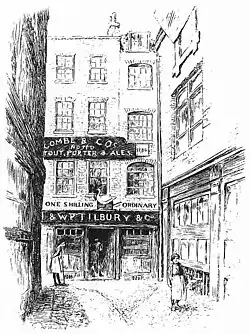
During the Age of Enlightenment, Masonic lodges formed an international network in which members encountered ideas concerning morality, sociability, religious toleration, liberty and constitutional government. Freemasonry helped circulate certain Enlightenment ideals in Britain, France and elsewhere, although its political influence varied considerably by place and period.[74]
Scottish soldiers and Jacobite exiles helped establish lodges on the European continent, where Masonic customs combined British institutional forms with local intellectual and political traditions.[75] Freemasonry became especially prominent in France, where estimates of membership by 1789 range from 50,000 to 100,000.[76]
Margaret C. Jacob has argued that lodges provided members with experience of constitutions, elections, representation and forms of self-government that could serve as models for wider society. Their British associations sometimes caused them to be viewed with suspicion by continental authorities. A Parisian lodge active in the 1720s, for example, included English Jacobite exiles.[77]
Masonic ritual and language also reflected Enlightenment themes. French lodges sometimes referred directly to enlightenment in initiation ceremonies, while British lodges described the education of the uninstructed as part of their purpose. Many lodges praised the Great Architect of the Universe as the creator of a rationally ordered cosmos.[78]
The historian R. R. Palmer argued that lodges generally operated independently and that Freemasons did not act as a unified political body.[79] The role of prominent Freemasons such as Benjamin Franklin and George Washington in the American Revolution has likewise remained a subject of debate.[80]
Daniel Roche challenged broad claims of Masonic egalitarianism, arguing that lodge membership often remained socially selective and tended to attract men of similar status.[81]
In a broader historical assessment, Norman Davies described Freemasonry as an influential European institution from about 1700 into the 20th century. It spread across Europe and into colonial territories in the Americas and Asia, and during the 19th century it was often associated with liberalism.[82] In predominantly Catholic countries, Masonic anticlericalism brought the fraternity into conflict with the Catholic Church. Fascist and communist governments later suppressed it in several countries. Davies listed Montesquieu, Voltaire, Sir Robert Walpole, Wolfgang Amadeus Mozart, Johann Wolfgang von Goethe, Benjamin Franklin and George Washington among its prominent members.[83]
Steven Bullock noted that by the late 18th century some English, Prussian and French lodges were headed by princes or monarchs. The Prince of Wales presided over English Masonry, Frederick the Great was associated with Prussian Masonry, and French lodges included members of the royal family. Napoleon, as Emperor of the French, appointed his brother as Grand Master of France.[84]
Emergence of Continental or Liberal Freemasonry
English Freemasonry reached France during the 1720s, initially through lodges of expatriates and exiled Jacobites. Distinctively French lodges later developed while retaining elements of the ritual of the Premier Grand Lodge of England. From France and Britain, Freemasonry spread across much of continental Europe during the 18th century.
The Grande Loge de France developed under the nominal Grand Mastership of the Duke of Clermont. His successor, Louis Philippe II, Duke of Orléans, reorganised the central body as the Grand Orient de France in 1773. Although disrupted during the French Revolution, French Freemasonry expanded during the 19th century.[85] Among its early 19th-century leaders was Alexandre Francois Auguste de Grasse, Comte de Grasse-Tilly.
France
During the 18th century, French politicians and intellectuals used Masonic lodges as meeting places in which Enlightenment ideas could be discussed. Some of those ideas later influenced political debates surrounding the French Revolution.[86]
Avner Halpern has argued that French Freemasonry later contributed to the organisation of the Radical Party, founded in 1901. Masonic organisational practices, including local congresses and a civil leadership model, were adapted for party-building purposes.[87]
Russia
Freemasonry was active in 18th-century Russia and contributed to the circulation of Enlightenment ideas, although it was repeatedly restricted by the state.[88]
According to Ludwik Hass, Freemasonry was formally illegal under the Russian Empire but was reintroduced by exiles who returned after the Revolution of 1905. Some had participated in politically active lodges in Paris and brought constitutional liberal ideas back to Russia. Russian Freemasons maintained connections with France and included politicians and activists. Some lodges supported Russia's participation in the First World War. The movement declined after the Bolsheviks seized power and was subsequently outlawed.[89]
Italy
According to Adrian Lyttelton, Freemasonry was an influential but semi-secret force in Italian political life during the late 19th and early 20th centuries. Its membership was especially strong among professionals, middle-class citizens, public officials and military officers. The two principal organisations were the Grand Orient of Italy and the Grand Lodge of Italy, which together had approximately 25,000 members in about 500 lodges.
Italian Freemasons generally supported Italian nationalism, unification and anticlericalism. Because the Catholic Church opposed aspects of Italian unification, Masonic organisations and the Church frequently stood on opposing sides of national political disputes.[90]
During 1914 and 1915, Freemasons supported Italian intervention in the First World War on the side of the Allies. After the war, they promoted the League of Nations as a framework for cooperation among independent states.[91]
Some early supporters and collaborators of Benito Mussolini were Freemasons, and several lodges initially welcomed Fascism as a defence against Bolshevism. Mussolini later sought accommodation with the Catholic Church and outlawed Freemasonry during the 1920s.[92]
Germany
North America

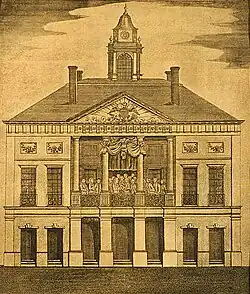


The earliest known Masonic lodges in British North America operated in Pennsylvania. John Moore, collector of the port of Pennsylvania, recorded attending a lodge there in 1715, two years before the formation of the first Grand Lodge in London. In 1731, the Grand Lodge of England appointed a Provincial Grand Master for North America, based in Pennsylvania.[93] This development contributed to the eventual formation of the Grand Lodge of Pennsylvania.
In Canada, Erasmus James Philipps became a Freemason while serving on a commission that surveyed boundaries in New England. He was appointed Provincial Grand Master for Nova Scotia in 1739 and founded the first Masonic lodge in Canada at Annapolis Royal, Nova Scotia.[94]
Other Pennsylvania lodges received warrants from the Antient Grand Lodge of England, the Grand Lodge of Scotland and the Grand Lodge of Ireland. Irish Freemasonry was particularly prominent in travelling military lodges attached to the British Army.[95][96] Some early lodges operated without formal warrants and applied for recognition only after becoming established.[97]
Following the American Revolution, independent Grand Lodges were established in individual states. A proposal to create a national Grand Lodge, with George Washington as Grand Master, was considered but not adopted because state Grand Lodges were unwilling to surrender their autonomy.[98]
On 30 April 1789, Washington took the presidential oath of office during his first inauguration upon a Bible belonging to St. John's Lodge No. 1 of New York.[99] The oath was administered by Robert R. Livingston, Chancellor of New York and the first Grand Master of the Grand Lodge of Free and Accepted Masons of the State of New York.[100]
Prince Hall Freemasonry
Prince Hall Freemasonry developed in response to the exclusion of African Americans from most early American lodges. In 1775, Prince Hall and 14 other African-American men were initiated into a British military lodge operating under a warrant from the Grand Lodge of Ireland, after being refused admission by local lodges in Boston.[101]
When the military lodge left North America after the Revolutionary War, Hall and his companions retained authority to meet but not to initiate additional members. In 1784, they received a warrant from the Premier Grand Lodge of England and established African Lodge No. 459. After the union of the English Grand Lodges in 1813, many American lodges were removed from English rolls, partly because of the War of 1812. African Lodge subsequently renamed itself African Lodge No. 1 and developed into a de facto Grand Lodge. Prince Hall Freemasonry later adopted a state Grand Lodge structure similar to that used by other American jurisdictions.[102]
Although there was no universal Masonic rule excluding men on the basis of race, admission policies varied among lodges and Grand Lodges. A small number of non-Prince Hall lodges admitted Black members, and Angelo Soliman became a prominent Freemason of African descent. Nevertheless, widespread racial segregation in 19th- and early-20th-century North America made membership in most mainstream lodges difficult or impossible for African Americans.
Most, though not all, United States Grand Lodges now recognise their Prince Hall counterparts, and efforts towards fuller mutual recognition have continued.[103] The United Grand Lodge of England recognises Prince Hall Grand Lodges that meet its recognition criteria.[104] Prince Hall jurisdictions preserve their African-American heritage while admitting men without regard to race or religion.[105]
Latin America and the Caribbean
Jamaican Freemasonry
Freemasonry was introduced to Jamaica by British settlers. In 1908, eleven Masonic lodges and chapters were recorded on the island, including bodies associated with three Grand Lodges, Craft Masonry and the Rose Croix.[106]
During slavery, membership was restricted to freeborn men. Following the abolition of slavery in 1838, Jamaican lodges were formally open to men of any race.[107] Jamaican Freemasons also maintained connections with lodges and political movements elsewhere in the Atlantic world.
The historian Jackie Ranston wrote:
Jamaica served as an arms depot for the revolutionary forces when two Kingston Freemasons, Wellwood and Maxwell Hyslop, financed the campaigns of Simón Bolívar, the Liberator, to whom six Latin American Republics owe their independence. Bolívar himself was a Mason, enjoying contacts with Brethren in Spain, England, France, and Venezuela until after gaining power in Venezuela, he prohibited all secret societies in 1828 and included the Freemasons.[107]
The Spanish government prohibited Freemasonry in its overseas empire during the mid-18th century and attempted to enforce the ban. Despite this, Freemasons participated in some movements for Latin American independence.[108] Political leaders associated with Freemasonry included Simón Bolívar, Francisco de Miranda, José de San Martín and Bernardo O'Higgins.[109] Masonic networks remained politically and socially influential in parts of Latin America after independence.[110] In Brazil, prominent Freemasons participated in the movement to abolish slavery.[111]
Mexico
Freemasonry was associated with liberalism and anticlericalism in 19th- and 20th-century Mexico, and many senior political figures were members.[112] Mexican Freemasons were divided over relations with the United States. A pro-American faction supported by United States minister Joel Roberts Poinsett became known as the Yorkinos.[113][114]
According to Karen Racine, Mexican presidents associated with Freemasonry included Guadalupe Victoria, Valentín Gómez Farías, Antonio López de Santa Anna, Benito Juárez, Sebastián Lerdo de Tejada, Porfirio Díaz, Francisco I. Madero, Venustiano Carranza, Plutarco Elías Calles, Lázaro Cárdenas, Emilio Portes Gil, Pascual Ortiz Rubio, Abelardo L. Rodríguez and Miguel Alemán Valdés.[115]
Freemasonry in the Middle East
Following the failure of the Italian revolutions of 1830, a number of Italian Freemasons went into exile. Some established a chapter of the Scottish Rite in Alexandria, which had a substantial Italian community. French Freemasons publicly organised a local chapter there in 1845.[116]
During the 19th and early 20th centuries, Masonic lodges operated in many parts of the Ottoman Empire. Several Sufi orders maintained relationships with them, and a number of Young Turks connected with the Bektashi Order were also Freemasons. Ottoman intellectuals sometimes compared Sufi and Masonic teachings, particularly their moral, spiritual and symbolic elements.[117]
Asia-Pacific
China
The first known lodge in China, Amity Lodge, was constituted at Canton in 1767. In 1875, the District Grand Lodge of China was divided into jurisdictions for Northern China and for Hong Kong and South China. Masonic activity in Hong Kong ceased during the Japanese occupation in the Second World War.
After the establishment of the People's Republic of China in 1949, some lodges relocated to Hong Kong or closed because of declining membership.[118] Freemasonry is prohibited by the Chinese Communist Party in mainland China but remains lawful in Hong Kong. It also continued in Taiwan, where the Grand Lodge of China is based in Taipei.[119]
Royal Sussex Lodge No. 501 was the first lodge established in Victoria City, Hong Kong, on 29 April 1844. Twenty lodges under the English Constitution now meet at Zetland Hall under the District Grand Lodge of Hong Kong and the Far East.[120]
Schisms
Racial schism
Relations between English and French Freemasonry changed substantially during the 19th century. In 1868, the Supreme Council of the Ancient and Accepted Scottish Rite of the State of Louisiana established itself within the jurisdiction of the Grand Lodge of Louisiana. The body was recognised by the Grand Orient de France but rejected as irregular by the Grand Lodge of Louisiana because it admitted Black members.
In 1869, the Grand Orient de France adopted a resolution stating that neither colour, race nor religion could disqualify a man from Freemasonry. The Grand Lodge of Louisiana withdrew recognition, and other American Grand Lodges later took similar action.[121]
Theological schism
A philosophical dispute at the Lausanne Congress of Supreme Councils of 1875 prompted the Grand Orient de France to reconsider its constitutional principles. Following a report by a Protestant pastor, the organisation concluded that Freemasonry, as a non-religious institution, should not require belief in God.[122]
The Grand Orient amended its constitution to emphasise absolute liberty of conscience and human solidarity, removing earlier references to belief in God and the immortality of the soul. The United Grand Lodge of England subsequently withdrew recognition from the Grand Orient de France. Political tensions between Britain and France may also have affected the decision. The division remains influential in modern Freemasonry.[123]
Evolution of styles
In 1894, several French lodges formed the modern Grande Loge de France. The new organisation retained reference to the Great Architect of the Universe while preserving other elements of French Masonic practice, occupying an intermediate position between Liberal and Anglo-American models.[124]
In 1913, the United Grand Lodge of England established relations with the newly formed Grande Loge Nationale Indépendante et Régulière pour la France et les Colonies Françaises, which adopted practices closer to those of Anglo-American Freemasonry.[125][126]
French Freemasonry consequently developed along several institutional and philosophical lines. The Grand Orient de France continued to emphasise freedom of conscience, secularism and social reform, while other bodies maintained religious requirements or sought recognition from Anglo-American jurisdictions.
Modern French and Continental Freemasonry is sometimes described in terms of three broad approaches:[127]
- Liberal or adogmatic Freemasonry, which emphasises liberty of conscience and laïcité, including the separation of religious and governmental authority;[128][129]
- Traditional Freemasonry, which preserves French ritual practices while retaining belief in a supreme being;[130] and
- Conservative or Anglo-American-aligned Freemasonry, which requires belief in a supreme being and follows recognition standards similar to those of the United Grand Lodge of England.[131][132][133]
The term Continental Freemasonry historically referred to the Masonic traditions that developed in continental Europe. Albert Mackey's 1873 Encyclopedia of Freemasonry, written from an Anglo-American perspective, described Continental lodges as retaining practices that had been abandoned or were never used in England, Ireland and Scotland.[134] Contemporary scholarship generally treats Continental Freemasonry as a collection of distinct philosophical and organisational traditions rather than simply a deviation from Anglo-American practice.
Liberal Freemasonry includes organisations such as the Grand Orient de France, which emphasises freedom of conscience, as well as bodies such as the Grande Loge de France, which combine traditional and liberal elements. These organisations have been involved in debates concerning secular government, democratic reform and civil rights in Europe and Latin America.[135]
In 1961, several Grand Lodges and Grand Orients established the Centre de Liaison et d'Information des Puissances maçonniques Signataires de l'Appel de Strasbourg (CLIPSAS), an international forum for cooperation among Masonic organisations. Its membership includes more than 100 traditional, liberal, women's and mixed-gender bodies.[136]
The United Grand Lodge of England maintains an exclusive system of recognition based on criteria including belief in a supreme being and male-only membership. CLIPSAS organisations generally permit broader interaction among Masonic traditions.[137] These systems are often described as Anglo-American and Liberal networks, although those terms do not reflect every variation within contemporary Freemasonry.[133]
In 1999, the United Grand Lodge of England acknowledged the Order of Women Freemasons and the Honourable Fraternity of Ancient Freemasons as legitimate Masonic bodies, while stopping short of formal recognition. It has maintained working relationships with both organisations and has participated with them in public events and educational activities.[138]
In 2018, UGLE issued guidance concerning transgender members. The guidance stated that a person who had joined as a man would not cease to be a Freemason after transitioning and that transgender men were eligible to apply for membership.[139]
Freemasonry and women
The status of women in medieval stonemasons' guilds remains uncertain. Under the legal principle of femme sole, a widow could sometimes continue her deceased husband's trade, although the extent of this right varied. In some places she could become a full member of a trade body; elsewhere she could operate only through deputies or approved male members.[140] Surviving evidence suggests that women generally held limited status in operative masonry.[141]
During the 1720s, James Anderson compiled the first printed constitutions of Freemasonry. These excluded women from lodge membership and influenced later Masonic constitutions.[142]
As Freemasonry spread in continental Europe, women participated in Lodges of Adoption connected with men's lodges. These organisations conferred degrees with names similar to those of male Freemasonry but used different ceremonies and teachings. French Masonic bodies largely discontinued the system during the early 19th century.[143][144] Related organisations later appeared in the United States but generally used degree names distinct from those of men's Freemasonry.[145]
Maria Deraismes was initiated into Freemasonry in 1882. She later resigned so that her lodge could rejoin its Grand Lodge. After attempts to obtain wider acceptance failed, Deraismes and Georges Martin founded a mixed-gender Masonic lodge that used Masonic ritual.[146] Annie Besant subsequently promoted co-Freemasonry in the English-speaking world.[147]
Disagreements over ritual and governance led to the development of women-only Masonic organisations in England and elsewhere. French Masons revived all-female Lodges of Adoption in 1901 but formally abandoned them again in 1935. Some of the lodges continued independently and contributed to the establishment of women's Continental Freemasonry in 1959.[144]
Continental Masonic bodies have generally been more accepting of women's and mixed-gender Freemasonry. During the 1890s, French Freemasons assisted the early co-Masonic movement by advancing members to the 33rd degree of the Ancient and Accepted Scottish Rite, enabling them to create their own Supreme Council in 1899.[148]
In 1999, the United Grand Lodge of England stated that the Order of Women Freemasons[149] and the Honourable Fraternity of Ancient Freemasons[150] practised Freemasonry in a form comparable to male lodges, although they were not formally recognised as regular jurisdictions.[21][151] Most Anglo-American Grand Lodges continue not to recognise women Freemasons as members of regular Freemasonry.[152]
In 2018, the United Grand Lodge of England issued guidance stating that a Freemason who transitioned after initiation would not cease to be a member. The same guidance stated that transgender men could apply for membership.[153]
Anti-Masonry

Anti-Masonry, also called Anti-Freemasonry, refers to opposition to Freemasonry.[154][155] There has never been a single unified anti-Masonic movement. Opponents have included religious institutions, political parties, governments and conspiracy theorists, including proponents of Masonic conspiracy theories and the Judeo-Masonic conspiracy theory.
Some anti-Masonic writers distinguished between Masonic traditions. Nesta Helen Webster, for example, directed much of her criticism towards Continental Freemasonry while describing regular Anglo-American Freemasonry more favourably.[156]
Masonic rituals and documents have been exposed or published since the 18th century. Some exposés lack context, reflect obsolete practices or contain deliberate inventions, including the Taxil hoax.[157][158][159]


Published exposés and alleged revelations have often contributed to religious and political criticism of Freemasonry. In the United States, the disappearance of William Morgan in 1826 helped produce the Anti-Masonic Party and popularised the term Anti-Masonry.[160]
Religious opposition
Freemasonry has been criticised by religious institutions that regard its teachings, rituals or secrecy as incompatible with their doctrines. It has also been a frequent subject of conspiracy theories portraying it as an occult or malevolent power.[161]
Christianity and Freemasonry
Catholicism
The Catholic Church has maintained one of the longest-standing institutional objections to Freemasonry. Catholic critics have argued that Masonic teachings promote a naturalistic or deistic religious outlook incompatible with Catholic doctrine.[162] Objections have also been raised to the use of solemn oaths.[163]
Some Catholic clergy involved in exorcism have described Masonic oaths as spiritually harmful to members or their descendants, although the concept of generational curses remains disputed within Catholic theology.[164]
Hundreds of papal and ecclesiastical statements have addressed Freemasonry.[165] The first major papal condemnation was Pope Clement XII's 1738 bull In eminenti apostolatus. In 2023, the Dicastery for the Doctrine of the Faith, with the approval of Pope Francis, reaffirmed that Catholics are forbidden to join Masonic lodges.[166]
The 1917 Code of Canon Law stated explicitly that joining Freemasonry incurred automatic excommunication and also prohibited books favourable to the fraternity.[167]
The 1983 Code of Canon Law did not explicitly name Freemasonry. It states that a person who joins an association plotting against the Church is to receive a just penalty and that a person who promotes or holds office in such an association may be punished by interdict. The omission of an explicit reference to Masonry led some Catholics and Freemasons to believe that the prohibition had been relaxed, particularly in the period after the Second Vatican Council.[168]
Cardinal Joseph Ratzinger, later Pope Benedict XVI, clarified the Church's position while serving as prefect of the Congregation for the Doctrine of the Faith. The 1983 Declaration on Masonic Associations stated that the Church's negative judgement remained unchanged, that Masonic principles were irreconcilable with Catholic doctrine and that Catholics enrolled in Masonic associations were in a state of grave sin and could not receive Holy Communion.[169]
In 2023, Pope Francis approved a further statement reaffirming the incompatibility of Catholic doctrine and Freemasonry.[170] The statement followed a request from Julito Cortes, Bishop of the Roman Catholic Diocese of Dumaguete, concerning the number of Catholics joining Masonic lodges in the Philippines.[171][172]
Most Masonic Grand Lodges do not prohibit Catholics from joining. Jurisdictions recognised by the United Grand Lodge of England reject the claim that Freemasonry is a religion or substitute for religion.[21] Catholic critics nevertheless point to anti-papal language in some historical rituals and to the participation of Masonic political figures in anticlerical campaigns.[173]
Protestant denominations
Protestant objections to Freemasonry have often focused on claims of mysticism, occultism or Satanism.[174]
The Masonic writer Albert Pike is frequently quoted by Protestant anti-Masonic authors as an authority on Masonic belief, although some quotations attributed to him are inaccurate or presented without context.[175]
Pike was not an official spokesman for Freemasonry as a whole, and his writings reflected his own views and the context of 19th-century Southern United States Freemasonry. Morals and Dogma itself included a disclaimer stating that readers were free to reject teachings they regarded as unsound.[176]
In 1993, the Southern Baptist Convention's Home Mission Board concluded that some elements of Freemasonry were incompatible with Christianity while others were not. It stated that participation should be treated as a matter of individual conscience.[177]
The issue remained controversial within the denomination. James L. Holly, president of Mission and Ministry to Men, published a three-volume critique of the convention's findings and of the role of Gary Leazer, then director of the Interfaith Witness Department of the North American Mission Board.[178] Leazer later published Fundamentalism and Freemasonry, arguing that the debate had been influenced by the Southern Baptist Convention conservative resurgence.
The Free Methodist Church founder B. T. Roberts opposed Freemasonry during the 19th century. He regarded it as a rival religious system and argued that churches should not appoint Freemasons as ministers. Opposition to secret societies became one of the principles associated with early Free Methodism.[179]
Many bishops of the Church of England have been Freemasons, including Archbishop Geoffrey Fisher.[180] Historically, many Anglicans saw no conflict between church membership and Freemasonry. In more recent decades, criticism has increased within parts of Anglicanism, particularly among evangelical Anglicans.
The former Archbishop of Canterbury Rowan Williams expressed reservations about aspects of Masonic ritual. In 2003, he apologised after stating that Masonic beliefs were incompatible with Christianity and acknowledging that, while Bishop of Monmouth, he had discouraged the appointment of Freemasons to senior diocesan positions.[181]
The Lutheran Church – Missouri Synod opposes Freemasonry on the grounds that Masonic teachings conflict with the Christian Gospel.[182]
In 1933, the Church of Greece declared membership in Freemasonry incompatible with Eastern Orthodox Christianity. The statement characterised Masonic secrecy, ritual and rationalism as contrary to Orthodox teaching and barred unrepentant members from receiving the Eucharist.[183]
Anglo-American Masonic bodies generally respond that Freemasonry is neither a religion nor a substitute for religion and that it does not teach the existence of a separate Masonic deity.[184]
Christian men who objected to Freemasonry or were discouraged from joining it sometimes entered other fraternal organisations, including the Knights of Columbus and Knights of Peter Claver for Catholics and the Royal Black Institution for Protestants.[185] Some of these bodies adopted organisational structures and symbols influenced by Freemasonry.[185]
Elements of Masonic ritual and symbolism also influenced the development of some Latter-day Saint temple ceremonies; see Freemasonry and Mormonism.
Islam and Freemasonry
The Ottoman sultan Mahmud I prohibited Freemasonry in the Ottoman Empire in 1748. In later Islamic polemics, the fraternity was sometimes associated with atheism, foreign influence or religious heterodoxy.[186]
Some Islamic anti-Masonic arguments have incorporated antisemitic conspiracy theories. Others have associated Freemasonry with Al-Masih ad-Dajjal, the false messiah in Islamic eschatology.[187][188]
The Syrian-Egyptian scholar Muhammad Rashid Rida played an important role in spreading anti-Masonic ideas in the early 20th-century Islamic world.[189] Through his journal Al-Manar, Rida promoted claims that later influenced the Muslim Brotherhood and other Islamist movements, including Hamas.[190] Article 28 of the 1988 Hamas Covenant alleged that Freemasonry, Rotary International and similar organisations served Zionist interests.[191]
Several Muslim-majority countries have prohibited Freemasonry, while others permit Masonic lodges. Turkey and Morocco have established Grand Lodges.[192] In Malaysia[193][194] and Lebanon,[195] district Grand Lodges operate under warrants from foreign Grand Lodges.
In 1972, Pakistani prime minister Zulfikar Ali Bhutto prohibited Freemasonry, and Masonic buildings were confiscated by the government.[196]
Masonic lodges existed in Iraq by 1917, when the first lodge under the United Grand Lodge of England opened. Nine English lodges operated by the 1950s, and a Scottish lodge had been established in 1923. Following the 1958 revolution, the political position of Freemasonry deteriorated, and all lodges were closed in 1965.[197] Under Saddam Hussein, Iraqi law prescribed severe penalties, including death, for promoting Zionist principles, a category that included Freemasonry.[187]
Political opposition
Freemasonry has faced political investigation, restriction and suppression under governments across the ideological spectrum.
Early legislation and politics
In 1799, English Freemasonry narrowly avoided prohibition under the Unlawful Societies Act.[198]
In the United States, the 1826 disappearance of William Morgan, known as the Morgan Affair, contributed to a national anti-Masonic movement and the formation of the short-lived Anti-Masonic Party.[199]
Totalitarian regimes
Freemasonry was suppressed by far-right governments, including Nazi Germany and Francoist Spain,[200][201] and by communist governments in Eastern Europe.[202]
In Nazi Germany, Freemasons were classified as political prisoners and were subjected to surveillance, imprisonment and persecution.[203] The forget-me-not was later associated with the memory of Masonic persecution during the Nazi period.[204][205]
Conspiracy theories
Freemasons are recurring subjects of conspiracy theories alleging links to the Illuminati, the New World Order or secret plans for political and global domination.
Modern distrust
In modern democracies, Freemasonry has periodically been subject to demands for greater transparency, particularly where members hold positions in the police, judiciary or government. In the United Kingdom, proposals have sometimes required police officers and justice officials to disclose Masonic membership.[206][207]
In Italy, Freemasonry became associated with political and financial scandal through the irregular Propaganda Due lodge, known as P2, during the 1970s and early 1980s.[208]
See also
- Ahiman Rezon
- Adonhiramite Rite
- Carbonari
- Chamber of Reflection
- Deism and Freemasonry
- Elias Ashmole
- Emulation Lodge of Improvement
- Freemasonry during World War I
- Freemasonry during World War II
- Freemasonry in Asia
- Freemasonry in Belgium
- Freemasonry in Cuba
- Freemasonry in Spain
- Freemasonry in the French Third Republic
- French Rite
- George Washington Masonic National Memorial
- Gormogons
- Grand College of Rites
- High Masonic degrees
- House of the Temple
- Job's Daughters International
- John Theophilus Desaguliers
- Joseph de Maistre
- Knight Kadosh
- La Chaîne d'Union
- Larmenius Charter
- List of general fraternities
- List of Masonic buildings
- List of Masonic Grand Lodges
- Les Neuf Sœurs
- Masonic music
- National Mexican Rite
- National Sojourners
- Observant Freemasonry
- Order of the Amaranth
- Philalethes
- Philosophical Scottish Rite
- Primitive Scottish Rite
- Rainbow for Girls
- Rite Opératif de Salomon
- Rite of Memphis-Misraim
- Rite of Strict Observance
- Royal Order of Scotland
- Schröder Rite
- Shriners Hospitals for Children
- Suppression of Freemasonry
- Swedenborgian Rite
- Thomas Dunckerley
References
- ↑ "Jachin and Boaz; or, an Authentic Key to the Door of Free-Masonry, Both Ancient and Modern" (PDF). Linford Lodge of Research. September 1797. Archived (PDF) from the original on 6 July 2024. Retrieved 10 October 2024.
- ↑ "History of Free Masonry". mtnebo91wv.org. Archived from the original on 4 December 2024. Retrieved 7 November 2024.
- ↑ Paine, Thomas (2 January 1818). "Thomas Paine Origin Free Masonry » Internet Infidels". Internet Infidels. Retrieved 7 November 2024.
- ↑ "History of Freemasonry | United Grand Lodge of England". www.ugle.org.uk. Archived from the original on 4 September 2024. Retrieved 6 September 2024.
- ↑ "Esoteric Freemasonry, by Jean-Louis de Biasi by Llewellyn Worldwide, LTD. - Issuu". Issuu. 8 February 2018. Archived from the original on 19 January 2025. Retrieved 16 January 2025.
- ↑ "Conservative and Liberal Freemasonry - Robert Burns Lodge No. 59". 6 April 2025.
- ↑ "Liberal Freemasons - Continental (Progressive) Freemasonry". Archived from the original on 2 February 2025. Retrieved 16 January 2025.
- ↑ "Liberal Masons: History, Philosophy, Practice, and Perspectives of the Adogmatic Freemasonry". Adelaide Literary Magazine. Archived from the original on 11 December 2024. Retrieved 20 March 2025.
- ↑ "HFAF | Freemasonry for Women". hfaf.org.
- ↑ "The secret ceremonies and rituals of female Freemasons". 8 November 2017.
- ↑ Constitution et Règlement Général (PDF) (in French). Paris: Grand Orient du France. November 2016. Retrieved 29 May 2025.
- ↑ "The Second Degree: Fellow Craft". Freemasonry. Archived from the original on 4 August 2024. Retrieved 7 November 2024.
- ↑ "Fellow Craft Degree Fee (NewMember)". Paul Revere Lodge. Archived from the original on 4 December 2024. Retrieved 7 November 2024.
- ↑ "General Regulations of a Free Mason 1723 – The Square Magazine". Archived from the original on 15 September 2024. Retrieved 7 November 2024.
- ↑ "Freemasonry". encyclopedia.ushmm.org. Archived from the original on 19 July 2024. Retrieved 19 August 2024.
- ↑ Schreiber, Jean-Philippe (9 November 2010). "Jews and Freemasonry in the nineteenth century: An overview of current knowledge". Archives Juives (in French). 43 (2): 30–48. doi:10.3917/aj.432.0030. ISSN 0003-9837.
- ↑ Önnerfors, Andreas (24 January 2017). Freemasonry: A Very Short Introduction. Oxford University Press. p. 105. ISBN 9780198796275.
- ↑ Ruiz, Julius (June 2011). "Fighting the International Conspiracy: The Francoist Persecution of Freemasonry, 1936–1945". Politics, Religion & Ideology. 12 (2): 179–196. doi:10.1080/21567689.2011.591981. ISSN 2156-7689. Archived from the original on 10 November 2024. Retrieved 19 August 2024.
- ↑ "What is Freemasonry". www.chevalierramsay.be. Archived from the original on 13 July 2017. Retrieved 14 June 2017.
- ↑ Hodapp, Christopher, Freemasons For Dummies, 2013, pp. 145–150.
- 1 2 3 4 5 "Frequently Asked Questions" Archived 22 October 2013 at the Wayback Machine United Grand Lodge of England, retrieved 30 October 2013.
- ↑ Pike, Albert, Morals and Dogma, 1871.
- ↑ Webb, Thomas Smith, The Freemason's Monitor, 1818.
- ↑ "Materials: Papers and Speakers" Archived 11 November 2016 at the Wayback Machine Provincial Grand Lodge of East Lancashire, retrieved 30 October 2013.
- ↑ "The Pieces of Architecture and the Origin of Masonic Study – the Square Magazine".
- ↑ "Lectures on the philosophy of freemasonry". 1915.
- ↑ "My Masonic Journey".
- ↑ "The Importance of Proficiency in Your Masonic Journey". 11 March 2024.
- ↑ "Esonet.com-Selected Esotericism Readings - The Agape or Masonic banquet". www.esonet.com.
- ↑ "Toasts for the Festive Board". freemasonry.bcy.ca. Archived from the original on 10 September 2024. Retrieved 7 November 2024.
- ↑ "Symbolical Masonry: Part One: The First Step: Chapter XVIII. Words, Grips and Tokens". sacred-texts.com. Retrieved 7 November 2024.
- ↑ "AAONMS Ritual Book". www.shrinersinternational.org. Retrieved 7 November 2024.
- ↑ "Learn about freemasonry: What is the freemason handshake?". Museum of Freemasonry. Archived from the original on 17 May 2024. Retrieved 7 November 2024.
- ↑ "Past Master" Masonic Dictionary, retrieved 31 October 2013.
- ↑ "Maçon célèbre : le Maître Installé" Archived 4 October 2018 at the Wayback Machine GADLU blog Maçonnique, 3 March 2013, retrieved 2 November 2013.
- ↑ For instance "Introduction into Freemasonry" Archived 9 November 2013 at the Wayback Machine, Provincial Grand Lodge of Hertfordshire, retrieved 8 November 2013.
- ↑ "Charitable work" Archived 22 October 2013 at the Wayback Machine, UGLE, retrieved 8 November 2013.
- ↑ John Hamill and Robert Gilbert, eds., Freemasonry, Angus, 2004, pp. 214–220.
- 1 2 3 4 5 Michael Johnstone, The Freemasons, Arcturus, 2005, pp. 101–120.
- ↑ "Les Officiers de Loge" Archived 3 November 2013 at the Wayback Machine Maconnieke Encyclopedie, retrieved 31 October 2013.
- ↑ "PS Review of Freemasonry". PS Review of Freemasonry. Archived from the original on 9 July 2023. Retrieved 7 November 2024.
- ↑ "Jurisdictional Membership Statistics – Masonic Service Association of North America". msana.com. Retrieved 17 December 2023.
- ↑ "About Grand Lodge | Grand Lodge of Ireland". Retrieved 17 December 2023.
- ↑ "Notre histoire". Grand Orient de France (in French). Retrieved 17 December 2023.
- ↑ "Notre histoire". Grand Orient de France (in French). Retrieved 17 December 2023.
- ↑ "About Grand Lodge | Grand Lodge of Ireland". Retrieved 17 December 2023.
- ↑ "Jurisdictional Membership Statistics – Masonic Service Association of North America". msana.com. Retrieved 17 December 2023.
- ↑ "Notre histoire". Grand Orient de France (in French). Retrieved 17 December 2023.
- ↑ Robert L. D. Cooper, Cracking the Freemason's Code, Rider, 2006, p. 229.
- ↑ Michael Johnstone, The Freemasons, Arcturus, 2005, pp. 95–98.
- ↑ J. S. M. Ward, "The Higher Degrees Handbook" Archived 27 June 2014 at the Wayback Machine, Pietre Stones, retrieved 11 November 2013.
- ↑ "The Supreme Council". www.sc33.org.uk. Archived from the original on 2 August 2021. Retrieved 17 June 2021.
- ↑ "What is Freemasonry?" Archived 9 January 2014 at the Wayback Machine Grand Lodge of Alberta, retrieved 7 November 2013.
- ↑ Snoek, Jan A. M. (2016). "Part III: The Renaissance and Early Modernity – Freemasonry". In Magee, Glenn A. (ed.). The Cambridge Handbook of Western Mysticism and Esotericism. Cambridge and New York City: Cambridge University Press. pp. 200–210. doi:10.1017/CBO9781139027649.018. ISBN 978-1139027649.
- ↑ Mark S. Dwor, "Some thoughts on the history of the Tracing Boards" Archived 9 October 2013 at the Wayback Machine, Grand Lodge of British Columbia and Yukon, 1999, retrieved 7 November 2013.
- ↑ Robert L. D. Cooper, Cracking the Freemason's Code, Rider, 2006, p. 79.
- ↑ "Masonic U.S. Recognition of French Grand Lodges in the 20th century", Paul M. Bessel, retrieved 8 November 2013.
- ↑ Andrew Prescott, "The Old Charges Revisited" Archived 27 September 2013 at the Wayback Machine, from Transactions of the Lodge of Research No. 2429 (Leicester), 2006, Pietre-Stones Masonic Papers, retrieved 12 October 2013.
- ↑ A. F. A. Woodford, preface to William James Hughan, The Old Charges of British Freemasons, London, 1872.
- ↑ John Yarker (1909). The Arcane Schools. Manchester. pp. 341–342.
{{cite book}}: CS1 maint: location missing publisher (link) - ↑ Robert L. D. Cooper, Cracking the Freemason's Code, Rider, 2006, chapter 4, p. 53.
- ↑ David Murray Lyon, History of the Lodge of Edinburgh (Mary's Chapel) No 1, Blackwood, 1873, preface.
- ↑ Stevenson, David (1988). The Origins of Freemasonry. Cambridge University Press. pp. 38–44. ISBN 0521396549.
- ↑ Dafoe, Stephen. "Rosicrucians and Freemasonry | Masonic Dictionary". www.masonicdictionary.com. Archived from the original on 28 January 2020. Retrieved 14 June 2017.
- ↑ Hall, Manly P. (2010). The Secret Teachings of All Ages: An Encyclopedic Outline of Masonic, Hermetic, Qabbalistic and Rosicrucian Symbolical Philosophy. Courier Corporation. ISBN 978-0486471433.
- ↑ "History of Freemasonry timeline". United Grand Lodge of England. Archived from the original on 26 August 2018. Retrieved 12 June 2018.
- ↑ Greer, John Michael (2021). Druidry Handbook: Spiritual Practice Rooted in the Living Earth. Weiser Books. p. 26. ISBN 978-1-63341-224-8.
- ↑ Bergreen, Laurence (2016). Casanova: The World of a Seductive Genius. Simon and Schuster. p. 119. ISBN 978-1-4767-1652-7.
- ↑ "Ars Quatuor Coronatorum – A Revised Style Guide" (PDF). Quatuor Coronati Lodge No. 2076. pp. 12–13. Archived (PDF) from the original on 19 January 2025. Retrieved 19 November 2024.
- ↑ S. Brent Morris (2006). The Complete Idiot's Guide to Freemasonry. Alpha/Penguin Books. p. 27. ISBN 1-59257-490-4.
- ↑ I. R. Clarke, "The Formation of the Grand Lodge of the Antients" Archived 23 June 2017 at the Wayback Machine, Ars Quatuor Coronatorum, vol. 79 (1966), pp. 270–273, Grand Lodge of British Columbia and Yukon, retrieved 28 June 2012.
- ↑ H. L. Haywood, "Various Grand Lodges" Archived 30 July 2014 at the Wayback Machine, The Builder, vol. X, no. 5, May 1924, Pietre Stones, retrieved 9 January 2014.
- ↑ Robert L. D. Cooper, Cracking the Freemason's Code, Rider, 2006, chapter 1, p. 17.
- ↑ Margaret C. Jacob, Living the Enlightenment: Freemasonry and Politics in Eighteenth-Century Europe, Oxford University Press, 1991, p. 49.
- ↑ Margaret C. Jacob, "Polite worlds of Enlightenment", in Martin Fitzpatrick and Peter Jones, eds., The Enlightenment World, Routledge, 2004, pp. 272–287.
- ↑ Daniel Roche, France in the Enlightenment, Harvard University Press, 1998, p. 436.
- ↑ Jacob, Living the Enlightenment, pp. 20, 73, 89.
- ↑ Jacob, Living the Enlightenment, pp. 145–147.
- ↑ Robert R. Palmer, The Age of the Democratic Revolution: The Struggle, 1970, p. 53.
- ↑ Neil L. York, "Freemasons and the American Revolution", The Historian, vol. 55, no. 2, 1993, pp. 315–330.
- ↑ Roche, p. 437.
- ↑ Norman Davies (1996). Europe: A History. Oxford University Press. p. 634. ISBN 978-0-19-820171-7.
- ↑ Davies, Europe, p. 634.
- ↑ Steven C. Bullock, "Initiating the enlightenment?: recent scholarship on European freemasonry", Eighteenth-Century Life, vol. 20, no. 1, 1996, pp. 80–92. online Archived 17 June 2018 at the Wayback Machine
- ↑ Histoire de la Franc-maçonnerie Archived 26 December 2015 at the Wayback Machine, Grand Orient de France, retrieved 12 November 2013.
- ↑ Margaret C. Jacob, Living the Enlightenment: Freemasonry & Politics in Eighteenth-Century Europe, 1992.
- ↑ Avner Halpern, "Freemasonry and party building in late 19th-century France", Modern & Contemporary France, vol. 10, no. 2, 2002, pp. 197–210.
- ↑ Douglas Smith, "Freemasonry and the public in eighteenth-century Russia", Eighteenth-Century Studies, vol. 29, no. 1, 1995, pp. 25–44.
- ↑ Ludwik Hass, "The Russian Masonic Movement in the Years 1906–1918", Acta Poloniae Historica, vol. 48, 1983, pp. 95–131.
- ↑ Adrian Lyttelton, "An Old Church and a New State: Italian Anticlericalism 1876–1915", European Studies Review, vol. 13, no. 2, 1983, pp. 225–248.
- ↑ Fulvio Conti, "From Universalism to Nationalism: Italian Freemasonry and the Great War", Journal of Modern Italian Studies, vol. 20, no. 5, 2015, pp. 640–662.
- ↑ Martin Clark, Modern Italy 1871–1995, 1996, p. 254.
- ↑ Francis Vicente, "An Overview of Early Freemasonry in Pennsylvania" Archived 20 May 2013 at the Wayback Machine, Pietre-Stones, retrieved 15 November 2013.
- ↑ "History of Freemasons in Nova Scotia". Archived from the original on 23 April 2016. Retrieved 23 April 2019.
- ↑ Werner Hartmann, "History of St. John's Lodge No. 1" Archived 7 December 2013 at the Wayback Machine, St. John's Lodge No. 1, A.Y.M., 2012, retrieved 16 November 2013.
- ↑ M. Baigent and R. Leigh, The Temple and the Lodge, Arrow, 1998, appendix 2, pp. 360–362, "Masonic Field Lodges in Regiments in America", 1775–77.
- ↑ Robert L. D. Cooper, Cracking the Freemason's Code, Rider, 2006, p. 190.
- ↑ Bullock, Steven C.; Institute of Early American History and Culture (Williamsburg, Va.) (1996). Revolutionary Brotherhood: Freemasonry and the Transformation of the American Social Order, 1730–1840. Chapel Hill: University of North Carolina Press. ISBN 978-0-8078-4750-3. OCLC 33334015.
- ↑ "George Washington Inaugural Bible". St. John's Lodge No. 1 A.Y.M. Archived from the original on 28 April 2024. Retrieved 28 April 2024.
- ↑ "President George Washington's First Inaugural Speech (1789)". National Archives. 18 May 2021. Archived from the original on 26 May 2024. Retrieved 26 May 2024.
- ↑ Johnson, Lawrence (1996). "Who is Prince Hall? And other well known Prince Hall Masons". Archived from the original on 2 June 2007. Retrieved 14 November 2005.
- ↑ "Prince Hall History Education Class" by Raymond T. Coleman Archived 3 March 2016 at the Wayback Machine, retrieved 13 October 2013.
- ↑ Bessel, Paul M. "Prince Hall Masonry Recognition details: Historical Maps". Archived from the original on 13 December 2010. Retrieved 14 November 2005.
- ↑ "Foreign Grand Lodges" Archived 22 October 2013 at the Wayback Machine, UGLE Website, retrieved 25 October 2013.
- ↑ "History of Prince Hall Masonry: What is Freemasonry" Archived 19 November 2013 at the Wayback Machine, Most Worshipful Prince Hall Grand Lodge Free and Accepted Masons Jurisdiction of Pennsylvania, retrieved 25 October 2013.
- ↑ Handbook of Jamaica. Google Books: Jamaica Government. 1908. p. 449.
- 1 2 "Charting The History Of Freemasons In Jamaica". Jamaica Gleaner Newspaper. 10 December 2017. Archived from the original on 28 January 2019. Retrieved 28 January 2019.
- ↑ Miriam Erickson, "Don José Rossi y Rubí and Spanish Freemasonry in the Revolutionary Atlantic, 1785–1798", Latin Americanist, vol. 63, no. 1, 2019, pp. 25–47.
- ↑ Karen Racine, "Freemasonry", in Michael S. Werner, ed., Encyclopedia of Mexico: History, Society, and Culture, Fitzroy Dearborn, 1997, vol. 1, pp. 538–540.
- ↑ Henrik Bogdan and Jan A. M. Snoek, eds., Handbook of Freemasonry, 2014, pp. 439–440.
- ↑ Renata Ribeiro Francisco, "Os heróis maçônicos na historiografia da abolição em São Paulo", História da Historiografia, vol. 13, no. 34, 2020, pp. 271–302.
- ↑ Karen Racine, "Freemasonry", in Michael S. Werner, ed., Encyclopedia of Mexico, 1997, vol. 1, pp. 538–540.
- ↑ Lillian Estelle Fisher, "Early Masonry in Mexico (1806–1828)", Southwestern Historical Quarterly, vol. 42, no. 3, 1939, pp. 198–214. online Archived 7 March 2023 at the Wayback Machine
- ↑ Watson Smith, "Influences from the United States on the Mexican Constitution of 1824", Arizona and the West, vol. 4, no. 2, 1962, pp. 113–126.
- ↑ Racine, p. 540.
- ↑ Landau, Jacob M. (1965). "Prolegomena to a study of secret societies in modern Egypt". Middle Eastern Studies. 1 (2). Routledge: 139. doi:10.1080/00263206508700010. ISSN 0026-3206 – via Tandfonline.
- ↑ De Poli, Barbara (2019). "Chapter 6: Sufi and Freemasons in the Ottoman Empire 6.1 ʿAbd Al-Qādir Al-Jazāʾirī". Freemansonry and the Orient: Esotericisms between the East and the West. Edizioni Ca' Foscari-Digital publishing. pp. 75–86. ISBN 978-8869693397.
- ↑ Hamill, John (1986). The Craft: A History of English Freemasonry. Wellingborough, GB: Crucible. ISBN 978-0-85030-460-2.
- ↑ "A mason in China". masons.au.
- ↑ "HOME". Zetland Hall Website. Archived from the original on 3 September 2023. Retrieved 11 September 2024.
- ↑ Paul Bessel, "U.S. Recognition of French Grand Lodges in the 1900s", from Heredom: The Transactions of the Scottish Rite Research Society, vol. 5, 1996, pp. 221–244, retrieved 12 November 2013.
- ↑ Brodsky, Michael L. "A European View of Masonic Growth". The Skirret. Retrieved 23 January 2025.
- ↑ Jack Buta, "The God Conspiracy, The Politics of Grand Lodge Foreign Relations" Archived 11 July 2011 at the Wayback Machine, Pietre-Stones, retrieved 23 November 2013.
- ↑ Historique de la GLDF Archived 22 December 2015 at the Wayback Machine, Grande Loge de France, retrieved 14 November 2013.
- ↑ Alain Bernheim, "My approach to Masonic History" Archived 9 July 2023 at the Wayback Machine, Manchester, 2011, Pietre-Stones, retrieved 14 November 2013.
- ↑ Jacob, Margaret C. (2007). The Origins of Freemasonry: Facts and Fictions. University of Pennsylvania Press. ISBN 978-0812219883.
- ↑ Nord, Philip (2016). "Freemasonry, Civil Society, and Democracy in Nineteenth-Century France". Tocqueville Review. 37 (2). doi:10.3138/ttr.37.2.161 (inactive 1 July 2025).
{{cite journal}}: CS1 maint: DOI inactive as of July 2025 (link) - ↑ "Liberals". FREEMASONRY.network. Archived from the original on 2 February 2025. Retrieved 16 January 2025.
- ↑ "Liberal Grand Lodges" Archived 20 January 2015 at the Wayback Machine, French Freemasonry, retrieved 14 November 2013.
- ↑ "Traditional Grand Lodges" Archived 14 July 2014 at the Wayback Machine, French Freemasonry, retrieved 14 November 2013.
- ↑ de Biasi, Jean-Louis (8 February 2018). "Esoteric Freemasonry". Issuu. p. 25. Archived from the original on 19 January 2025. Retrieved 16 January 2025.
- ↑ "Regular Grand Lodges" Archived 20 January 2015 at the Wayback Machine, French Freemasonry, retrieved 14 November 2013.
- 1 2 Önnerfors, Andreas (2017). Freemasonry: A Very Short Introduction. Oxford University Press. ISBN 978-0198796275.
- ↑ "Continental Lodges" Archived 3 December 2013 at the Wayback Machine, Mackey's Encyclopedia of Freemasonry, retrieved 30 November 2013.
- ↑ For instance "Women in Freemasonry, and Continental Freemasonry" Archived 3 December 2013 at the Wayback Machine, Corn Wine and Oil, June 2009, retrieved 30 November 2013.
- ↑ Snoek, Jan A. M.; Henrik Bogdan (2014). Handbook of Freemasonry. Brill. ISBN 978-9004273122.
- ↑ Révauger, Cécile (2014). "Unity and Diversity in European Freemasonry". Journal for Research into Freemasonry and Fraternalism. 5 (1).
- ↑ "Women Freemasons". United Grand Lodge of England. Retrieved 16 January 2024.
- ↑ Gayle, Damien (1 August 2018). "Freemasons to admit women – but only if they first joined as men". The Guardian. Retrieved 16 January 2024.
- ↑ Antonia Fraser, The Weaker Vessel, Mandarin Paperbacks, 1989, pp. 108–109.
- ↑ For example, David Murray Lyon, History of the Lodge of Edinburgh, Blackwood, Edinburgh, 1873, pp. 121–123.
- ↑ Anderson, James (1734) [1723]. Paul Royster (ed.). The Constitutions of the Free-Masons (Philadelphia ed.). Philadelphia, Pennsylvania: Benjamin Franklin. p. 49. Archived from the original on 19 October 2013. Retrieved 12 August 2013.
The Persons admitted Members of a Lodge must be good and true Men, free-born, and of mature and discreet Age, no Bondmen, no Women, no immoral or scandalous Men, but of good Report.
- ↑ "Adoptive Freemasonry" Archived 4 October 2013 at the Wayback Machine, entry from Mackey's Lexicon of Freemasonry.
- 1 2 Barbara L. Thames, "A History of Women's Masonry" Archived 15 August 2013 at the Wayback Machine, Phoenix Masonry, retrieved 5 March 2013.
- ↑ "Order of the Eastern Star" Masonic Dictionary, retrieved 9 January 2013.
- ↑ "Maria Deraismes (1828–1894)" Archived 4 October 2013 at the Wayback Machine, Droit Humain, retrieved 5 March 2013.
- ↑ Jeanne Heaslewood, "A Brief History of the Founding of Co-Freemasonry" Archived 7 June 2013 at the Wayback Machine, 1999, Phoenix Masonry, retrieved 12 August 2013.
- ↑ "Histoire du Droit Humain", Droit Humain, retrieved 12 August 2013.
- ↑ "The Order of Women Freemasons | Women's Freemasonry | Nationwide". www.owf.org.uk. Retrieved 17 June 2021.
- ↑ "HFAF | Freemasonry for Women". Archived from the original on 2 June 2024. Retrieved 17 June 2021.
- ↑ "Text of UGLE statement" Archived 4 June 2013 at the Wayback Machine, Honourable Fraternity of Ancient Freemasons – Freemasonry For Women, retrieved 12 August 2012.
- ↑ Karen Kidd, Haunted Chambers: The Lives of Early Women Freemasons, Cornerstone, 2009, pp. 204–205.
- ↑ Damien Gayle (2018). "Freemasons to admit women – but only if they first joined as men". The Guardian. Retrieved 1 August 2018.
- ↑ "Anti-Masonry", Oxford English Dictionary, Compact Edition, Oxford University Press, 1979, p. 369.
- ↑ "Definition of Antimasonry". Webster Dictionary. Archived from the original on 28 September 2011. Retrieved 8 September 2011.
- ↑ Heimbichner, S. Craig; Parfrey, Adam (2012). Ritual America: Secret Brotherhoods and Their Influence on American Society: A Visual Guide. Feral House. p. 187. ISBN 978-1936239153.
- ↑ Morris, S. Brent (2006). The Complete Idiot's Guide to Freemasonry. New York: Alpha Books. pp. 85, also discussed in chapters 13 and 16. ISBN 978-1-59257-490-2. OCLC 68042376.
- ↑ Robinson, John J. (1993). A Pilgrim's Path. New York: M. Evans. p. 129. ISBN 978-0-87131-732-2. OCLC 27381296.
- ↑ de Hoyos, Arturo; S. Brent Morris (18 August 2002). "Leo Taxil Hoax – Bibliography". Grand Lodge of British Columbia and Yukon. Archived from the original on 6 August 2011. Retrieved 7 July 2007.
- ↑ "Anti-mason" Archived 16 April 2009 at the Wayback Machine, infoplease.com, retrieved 9 January 2014.
- ↑ Morris, S. Brent, The Complete Idiot's Guide to Freemasonry, Alpha Books, 2006, p. 204.
- ↑ Cardinal Law, Bernard (19 April 1985). "Letter of 19 April 1985 to U.S. Bishops Concerning Masonry". CatholicCulture.org. Archived from the original on 16 July 2015. Retrieved 9 July 2007.
- ↑ Can Catholics Be Freemasons?
- ↑ Exorcist Diary: Generational Curses
- ↑ Emanuela Tulli; Angela Pellicciari [in Italian] (26 June 2023). "From Clement XII to Ratzinger, the Popes and Freemasonry" (in Italian). ANSA.
{{cite web}}: CS1 maint: deprecated archival service (link) - ↑ "Vatican confirms Catholics still forbidden to join Masonic lodges". 15 November 2023. Archived from the original on 16 November 2023. Retrieved 16 November 2023.
- ↑ Canon 2335, 1917 Code of Canon Law, from "Canon Law regarding Freemasonry, 1917–1983". Grand Lodge of British Columbia and Yukon. Archived from the original on 5 January 2002. Retrieved 11 May 2007.
- ↑ McInvale, Reid (1991). "Roman Catholic Church Law Regarding Freemasonry". Transactions of Texas Lodge of Research. 27: 86–97. OCLC 47204246. Archived from the original on 17 October 2015. Retrieved 26 November 2015.
- ↑ Congregation for the Doctrine of the Faith, Declaration on Masonic Associations Archived 14 March 2001 at the Wayback Machine, 26 November 1983, retrieved 26 November 2015.
- ↑ Franciscus, Dicasterium Pro Doctrina Fidei Archived 15 November 2023 at the Wayback Machine, note for the audience with the Holy Father, Vatican City, 13 November 2023.
- ↑ "Vatican confirms Catholics still forbidden to join Masonic lodges". Vatican News. 15 November 2023. Archived from the original on 16 November 2023. Retrieved 16 November 2023.
- ↑ Rojas, Jose R. (20 February 2020). "Pastoral guidelines in dealing with individual Catholics – members of Masonry". CBCPNews. Archived from the original on 27 February 2025. Retrieved 16 November 2023.
- ↑ What are the Masons? Are Catholics allowed to belong to this organization?
- ↑ Jack Chick. "The Curse of Baphomet". Archived from the original on 11 May 2008. Retrieved 29 September 2007.
- ↑ Arturo de Hoyos and S. Brent Morris (2004). Is it True What They Say About Freemasonry, 2nd edition (revised), chapter 1. M. Evans & Company. Archived from the original on 2 December 2013.
- ↑ Pike, Albert; T. W. Hugo; Scottish Rite (Masonic order). Supreme Council of the Thirty-Third Degree for the Southern Jurisdiction (1950) [1871]. Morals and Dogma of the Ancient and Accepted Scottish Rite of Freemasonry. Washington, DC: House of the Temple. OCLC 12870276.
In preparing this work [Pike] has been about equally Author and Compiler. (p. iii.) ... The teachings of these Readings are not sacramental, so far as they go beyond the realm of Morality into those of other domains of Thought and Truth. The Ancient and Accepted Scottish Rite uses the word "Dogma" in its true sense of doctrine, or teaching; and is not dogmatic in the odious sense of that term. Everyone is entirely free to reject and dissent from whatsoever herein may seem to him to be untrue or unsound (p. iv).
{{cite book}}: CS1 maint: multiple names: authors list (link) - ↑ "Baptists and Freemasonry? Can a Christian be a Faithful Believer and be a Freemason?". Archived from the original on 16 January 2024. Retrieved 16 January 2024.
- ↑ "FREEMASONRY AND THE SOUTHERN BAPTIST CHURCH Part 2". Archived from the original on 16 January 2024. Retrieved 16 January 2024.
- ↑ Snyder, Howard (2006). Populist Saints. Grand Rapids, Michigan: William B. Eerdmans Publishing Company. p. 727.
- ↑ Beresiner, Yasha (July 2006). "Archbishop Fisher – A Godly man and a Brother". Masonic Quarterly Magazine (18). Archived from the original on 28 September 2007. Retrieved 7 May 2007.
- ↑ Hastings, Chris; Elizabeth Day (20 April 2003). "Rowan Williams apologises to Freemasons". The Daily Telegraph. Archived from the original on 23 November 2007. Retrieved 9 July 2007.
- ↑ "LCMS Views - Frequently Asked Questions - The Lutheran Church—Missouri Synod". www.lcms.org. Archived from the original on 9 May 2026. Retrieved 9 June 2026.
- ↑ "Freemasonry: Official Statement of the Church of Greece (1933)". Orthodoxinfo.com. 12 October 1933. Archived from the original on 6 January 2011. Retrieved 15 January 2011.
- ↑ "Freemasonry and Religion" (PDF). United Grand Lodge of England. Archived (PDF) from the original on 5 November 2013. Retrieved 2 November 2013.
- 1 2 Fields, Rona M. (1980). Northern Ireland: Society Under Siege. Transaction Publishers. p. 113. ISBN 978-1412845090.
- ↑ Layiktez, Cecil, "Freemasonry in the Islamic World Archived 1 August 2019 at the Wayback Machine", Pietre-Stones Review of Freemasonry, 1996.
- 1 2 Sands, David R. (1 July 2004). "Saddam to be formally charged". The Washington Times. Archived from the original on 19 March 2006. Retrieved 18 June 2006.
- ↑ Prescott, Andrew. The Study of Freemasonry as a New Academic Discipline. pp. 13–14. Archived from the original on 13 February 2009. Retrieved 18 December 2008.
- ↑ Rickenbacher, Daniel (6 December 2019). "The 'War Against Islam': How a Conspiracy Theory Drove and Shaped the Islamist Movement". Archived from the original on 18 August 2021.
- ↑ Rickenbacher, Daniel (6 December 2019). "The 'War Against Islam': How a Conspiracy Theory Drove and Shaped the Islamist Movement". Archived from the original on 18 August 2021.
- ↑ "Hamas Covenant 1988". Avalon.law.yale.edu. 18 August 1988. Archived from the original on 17 November 2015. Retrieved 15 January 2011.
- ↑ Leyiktez, Celil, "Freemasonry in the Islamic World" Archived 1 August 2019 at the Wayback Machine, Pietre-Stones, retrieved 2 October 2007.
- ↑ "Home Page", District Grand Lodge of the Eastern Archipelago Archived 9 January 2014 at the Wayback Machine, retrieved 9 January 2014.
- ↑ "Mystery unveiled". The Star Online. 17 April 2005. Archived from the original on 27 February 2014. Retrieved 13 February 2014.
- ↑ Freemasonry in Lebanon Lodges linked to the Grand Lodge of Scotland, retrieved 22 August 2013.
- ↑ Peerzada Salman, "Masonic Mystique", December 2009, Dawn.com, retrieved 3 January 2012.
- ↑ Kent Henderson, "Freemasonry in Islamic Countries" Archived 13 November 2013 at the Wayback Machine, 2007 paper, Pietre Stones, retrieved 4 January 2014.
- ↑ Andrew Prescott, "The Unlawful Societies Act" Archived 2 June 2017 at the Wayback Machine, first published in M. D. J. Scanlan, ed., The Social Impact of Freemasonry on the Modern Western World, The Canonbury Papers I, London: Canonbury Masonic Research Centre, 2002, pp. 116–134, retrieved 9 January 2014.
- ↑ "The Morgan Affair" Archived 25 March 2014 at the Wayback Machine, reprinted from The Short Talk Bulletin, vol. XI, March 1933, no. 3, retrieved 4 January 2014.
- ↑ Wilkenson, James; H. Stuart Hughes (1995). Contemporary Europe: A History. Englewood Cliffs, NJ: Prentice Hall. p. 237. ISBN 978-0-13-291840-4. OCLC 31009810.
- ↑ Zierer, Otto (1976). Concise History of Great Nations: History of Germany. New York: Leon Amiel Publisher. p. 104. ISBN 978-0-8148-0673-9. OCLC 3250405.
- ↑ Michael Johnstone, The Freemasons, Arcturus, 2005, pp. 73–75.
- ↑ Katz (1990). "Jews and Freemasons in Europe". In Israel Gutman (ed.). The Encyclopedia of the Holocaust. p. vol. 2, p. 531. ISBN 978-0-02-897166-7. OCLC 20594356.
- ↑ "Das Vergißmeinnicht-Abzeichen und die Freimaurerei, Die wahre Geschichte" (in German). Internetloge.de. Archived from the original on 2 May 2019. Retrieved 8 July 2006.
- ↑ "The Story Behind Forget Me Not Emblem!". Masonic Network. 11 December 2009. Archived from the original on 6 March 2016. Retrieved 19 May 2013.
- ↑ Bright, Martin, "MPs told to declare links to Masons", The Guardian, 12 June 2005.
- ↑ Bell, Bethan (11 December 2025). "Met Police must reveal membership of Freemasons". bbc.co.uk. Retrieved 29 December 2025.
- ↑ King, Edward L. (2007). "P2 Lodge". Archived from the original on 3 February 2021. Retrieved 31 October 2006.
External links
- . Encyclopædia Britannica (11th ed.). 1911.
- Web of Hiram Archived 29 September 2007 at the Wayback Machine at the University of Bradford, a database of donated Masonic material
- Masonic Books Online from the Pietre-Stones Review of Freemasonry
- The Constitutions of the Free-Masons (1734), by James Anderson, Benjamin Franklin and Paul Royster, hosted by the Libraries at the University of Nebraska–Lincoln
- The Mysteries of Free Masonry by William Morgan, at Project Gutenberg
- A Legislative Investigation into Masonry (1832) at the Internet Archive, OCLC 1560509
- The United Grand Lodge of England's Library and Museum of Freemasonry Archived 27 May 2019 at the Wayback Machine, London
- Articles on Judaism and Freemasonry
- Anti-Masonry: Points of View Archived 19 May 2019 at the Wayback Machine, Edward L. King's Masonic website
- The International Order of Co-Freemasonry Le Droit Humain
- "Freimaurer-wiki: free Wiki project about Freemasonry" (in German).
Fraternal organisations with origins in the United Kingdom in the 18th century, sorted by bodies, lodges, locations and rites | |||||||||||||||||||
| General |
|  Square and Compasses Freemasons' Hall, London, headquarters (1775/1933-) of the United Grand Lodge of England (1722-) | |||||||||||||||||
| Anglo-American Freemasonry |
| ||||||||||||||||||
| Continental Freemasonry and Co-Freemasonry, including CLIPSAS |
| ||||||||||||||||||
| Appendant Orders |
| ||||||||||||||||||
| People |
| ||||||||||||||||||
| Places |
| ||||||||||||||||||
| Anti-Masonry |
| ||||||||||||||||||
| |||||||||||||||||||
