托塔韦人
托塔韦人(学名:Homo erectus tautavelensis)是直立人的亚种,因在法国托塔韦勒的阿拉戈洞穴发现形成于约45万年前的化石而得名。对托塔韦人的发掘自1964年开始,首次重大发现是在1969年。
托塔韦人 化石时期: | |
|---|---|
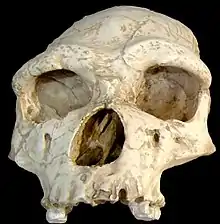 | |
| 托塔韦人化石,形成于约45万年前 | |
科学分类  | |
| 界: | 动物界 Animalia |
| 门: | 脊索动物门 Chordata |
| 纲: | 哺乳纲 Mammalia |
| 目: | 灵长目 Primates |
| 科: | 人科 Hominidae |
| 属: | 人属 Homo |
| 种: | †直立人 H. erectus |
| 亚种: | †托塔韦人 H. e. tautavelensis |
| 三名法 | |
| †Homo erectus tautavelensis de Lumley, 1971 | |
 | |
| 发现托塔韦人化石的地点 | |
参见
- 人类演化
参考资料
This article is issued from Wikipedia. The text is licensed under Creative Commons - Attribution - Sharealike. Additional terms may apply for the media files.