葡屬印度
印度國 Estado da Índia(葡萄牙語) | |||||||||||||||||||||||||||||||
|---|---|---|---|---|---|---|---|---|---|---|---|---|---|---|---|---|---|---|---|---|---|---|---|---|---|---|---|---|---|---|---|
| 1505年—1961年 | |||||||||||||||||||||||||||||||
 盾徽
(1951年–1961年) | |||||||||||||||||||||||||||||||
| 国歌:《愛國歌》(1808-1826) Hino Patriótico 《立憲頌》(1826-1911) Hino da Carta 《葡萄牙人》(1911-1961) A Portuguesa | |||||||||||||||||||||||||||||||
 | |||||||||||||||||||||||||||||||
| 地位 | 葡萄牙殖民地(1505年-1946年) 葡萄牙海外省(1946年-1961年) | ||||||||||||||||||||||||||||||
| 首都 |
| ||||||||||||||||||||||||||||||
| 官方語言 | 葡萄牙文 | ||||||||||||||||||||||||||||||
| 常用語言 | |||||||||||||||||||||||||||||||
| 宗教 | 官方宗教: 天主教 主要宗教: 印度教 伊斯蘭教 次要宗教: 拜火教[1][2] 猶太教[3] 新教 | ||||||||||||||||||||||||||||||
| 君主和/或國家元首 | |||||||||||||||||||||||||||||||
• 1505年-1521年 | 曼努爾一世 | ||||||||||||||||||||||||||||||
• 1958年-1961年 | 阿梅里科·湯瑪斯 | ||||||||||||||||||||||||||||||
| 總督 | |||||||||||||||||||||||||||||||
• 1505–1509 | 法蘭西斯科·德·阿爾梅達(首任) | ||||||||||||||||||||||||||||||
• 1958–1961 | 瓦薩羅·席爾瓦(末任) | ||||||||||||||||||||||||||||||
| 历史时期 | 帝國主義 | ||||||||||||||||||||||||||||||
• 建立 | 1505年8月15日 | ||||||||||||||||||||||||||||||
• 印度入侵 | 1961年12月19日 | ||||||||||||||||||||||||||||||
| 面积 | |||||||||||||||||||||||||||||||
• 总计 | 4,305平方公里 | ||||||||||||||||||||||||||||||
| 货币 |
| ||||||||||||||||||||||||||||||
| |||||||||||||||||||||||||||||||
| 今属于 | |||||||||||||||||||||||||||||||


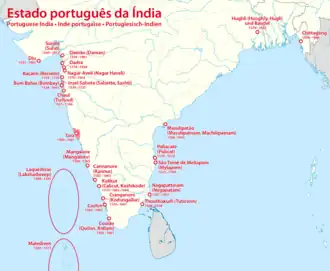
印度國(葡萄牙語:Estado da Índia,發音:[ɨʃˈtaðu ðɐ ˈĩdjɐ]),又稱葡萄牙印度國(葡萄牙語:Estado Português da Índia)或葡屬印度(葡萄牙語:Índia Portuguesa,發音:[ˈĩ.djɐ puɾ.tuˈɣe.zɐ]),是葡萄牙帝國的一個海外行政實體,於葡萄牙人瓦斯科·達伽馬發現通往印度次大陸之海上航線七年後建立。葡屬印度的首府,是葡萄牙在印度洋沿岸各處軍事堡壘與海港所構成之據點網絡的治理中心。
1505年,科欽王國經談判成為葡萄牙的保護國後,首任總督法蘭西斯科·德·阿爾梅達在馬拉巴爾地區的曼努爾堡建立行動基地。1510年,葡萄牙自比賈布爾蘇丹國手中征服果阿後,果阿遂成為抵達印度之葡萄牙印度艦隊的主要停泊港。1530年,總督轄區的首府由科欽遷至果阿。[4][5]自1535年起,孟買為葡屬印度的一處港口,當時稱為邦巴伊亞(Bom Bahia);至1661年,依英葡《婚姻條約》之安排,該地作為布拉干薩的凱薩琳嫁妝之一部份,移交予英王查理二世。「印度國」一詞則自16世紀中葉起,開始經常出現於文書中。[6]: 145
直至18世紀,駐果亞總督仍管轄印度洋及其周邊的所有葡萄牙屬地,範圍自非洲南部延伸至東南亞。1752年,莫三比克單獨設立政府;自1844年起,葡屬果亞不再管轄澳門、索洛島與帝汶,並實際成為葡萄牙的一個省分。[7]然而,駐果亞總督實際能控制的範圍,仍只限於東印度葡萄牙聚落的一部分;另有若干聚落並未正式納入行政體系,而是由私人經營,既無長官,也無市政議會(câmara)。至18世紀末,由於歐洲與印度各方勢力競爭日益激烈,葡萄牙遂陸續放棄大多數這類非正式殖民地。[6]
其後,葡萄牙的權力範圍逐漸限於印度西岸的卡納達、坎貝與康坎等地。1947年英屬印度解體時,葡屬印度由三個行政區組成,有時亦合稱為「果亞」:果亞,包括安吉第烏島;達曼,包括達德拉-納加爾哈維利兩處外飛地;以及第烏。1954年,葡萄牙「新國家」政權失去對達德拉-納加爾哈維利的事實控制。最後,在賈瓦哈拉爾·尼赫魯主政下,印度於1961年12月兼併果亞,葡萄牙遂失去其餘海外領地。葡萄牙直到康乃馨革命與「新國家」政權垮臺後,才依1974年12月31日簽署的條約,承認印度對上述地區的控制。[8][9]
背景
| 殖民時期的印度 | ||||||||||||||
|---|---|---|---|---|---|---|---|---|---|---|---|---|---|---|
 | ||||||||||||||
|
||||||||||||||
|
||||||||||||||
|
英屬印度諸省 (1600–1947年) | ||||||||||||||
|
||||||||||||||
- 瓦斯科·達伽馬登陸印度
葡萄牙人與印度次大陸的首次接觸發生於1498年5月20日,當時瓦斯科·達伽馬抵達位於馬拉巴爾海岸的卡利卡特,即今科澤科德。葡萄牙船隊停泊於卡利卡特外海後,邀請當地漁民登船,並購買了一些當地物品。一名葡萄牙囚犯隨同漁民前往港口,遇見一名突尼西亞穆斯林;對方以卡斯提爾西班牙語向他說:「願魔鬼把你帶走!你到這裡來做什麼?」[10]依此人的建議,達伽馬派遣一小隊人員前往蓬納尼,拜會卡利卡特的統治者扎莫林。儘管阿拉伯商人反對,達伽馬仍設法從扎莫林取得授予貿易權的特許文書;然而,葡萄牙人無法以黃金繳納規定的關稅,也無法以黃金支付其貨品價款。[11]
後來,卡利卡特官員暫時扣留達伽馬派出的葡萄牙代理人,作為付款擔保。此事激怒達伽馬,他遂擄捕數名當地人與十六名漁民,並將其強行帶走。[12]
達伽馬於1498年8月啟程返回葡萄牙,並於1499年1月抵達。雖然他帶回的貴重物品數量有限,卻足以使葡萄牙人看見印度航路所蘊含的財富機會,並由此掀起一陣「興奮與行動的熱潮」。[13]
- 佩德羅·艾瓦里茲·卡布拉爾
佩德羅·艾瓦里茲·卡布拉爾航往印度,原欲從事黑胡椒及其他香料貿易,並於1500年9月13日抵達卡利卡特,在當地設立商館。其後,卡布拉爾因與扎莫林發生爭端,扣押一艘屬於城中居民的船隻;葡萄牙商館隨即遭卡利卡特居民襲擊,五十餘名葡萄牙人因此喪生。[14]卡布拉爾對商館遭襲一事極為憤怒,遂奪取停泊於港內的十艘阿拉伯商船,殺害約六百名船員,沒收其貨物,並焚毀船隻。為報復對方違反協議,卡布拉爾又命令艦隊對卡利卡特砲擊整整一日。
儘管卡布拉爾曾採取大規模暴力手段,他仍成功與科欽及坎納諾爾(今坎努爾)的地方統治者訂立有利條約。1501年1月16日,卡布拉爾啟程返航,並於同年6月23日抵達葡萄牙;他出航時所率十三艘船,返抵時僅餘四艘。
- 若昂·達·諾瓦
第三次葡萄牙印度艦隊由若昂·達·諾瓦指揮,共有四艘船,其主要任務為採購香料並返回歐洲。航行途中,艦隊在南大西洋發現亞森欣島與聖赫勒拿島。雖然此次航行原本規劃為純商業遠征,艦隊仍在卡利卡特外海與扎莫林所屬船隻交戰,是為第一次坎納諾爾海戰,亦即葡屬印度史上首次重要海戰。
1502年,若干與達·諾瓦並無已知關聯的葡萄牙商人在普利卡特建立商館;該地位於潟湖口,為天然良港。[15]
- 瓦斯科·達伽馬
1502年,瓦斯科·達伽馬率領十五艘船、800人第二次航往印度,同年於10月30日抵達卡利卡特。此次,達伽馬要求將所有穆斯林逐出卡利卡特,但遭到拒絕。當地統治者雖表示願意簽訂條約,但達伽馬得知扎莫林正致書鄰近統治者,邀其共同抵抗葡萄牙人後,便下令砲擊該城,並奪取數艘運米船。[16]在印度期間,達伽馬又攻擊並劫掠霍納瓦爾,並威脅巴特卡爾,使其成為葡萄牙的朝貢國;其後又在坎納諾爾締結貿易條約、設立商館,並於1503年卡利卡特海戰中,與扎莫林所屬艦隊交戰。1503年9月,達伽馬返回葡萄牙。.[17]
- 阿方索·德·阿爾布克爾克
1503年遠征,是其指揮官阿方索·德·阿爾布克爾克首次航往印度。此次遠征的活動範圍有限,主要是在盟邦科欽王國境內興建堡壘、與扎莫林締結一項年內即告破裂的和約,並在奎隆開設新的商館。[13]
- 洛波·蘇亞雷斯·德·阿爾貝加里亞
第六次葡萄牙印度艦隊由洛波·蘇亞雷斯·德·阿爾貝加里亞指揮。艦隊抵達印度後,先砲擊卡利卡特,並馳援在科欽海戰中抵禦扎莫林大舉進攻的杜阿爾特·帕切科·佩雷拉與科欽葡萄牙駐軍。其後,蘇亞雷斯洗劫格朗格努爾,又與塔努爾國王結盟,使其脫離扎莫林的宗主權;最後,他在潘達拉內海戰中擄獲一支大型埃及商船隊。
歷史
建立初期
- 法蘭西斯科·德·阿爾梅達
1505年3月25日,葡萄牙國王曼努爾一世任命法蘭西斯科·德·阿爾梅達為印度總督,條件是他須在印度西南海岸設立四座堡壘,分別位於安吉第烏島、坎納諾爾、科欽與奎隆。[18]同日,阿爾梅達率領第七葡萄牙印度艦隊自葡萄牙啟航;該艦隊共有22艘船,載有1500人。[18]

同年9月13日,阿爾梅達抵達安吉迪瓦島,並在島上開始興建安吉迪瓦堡。[18]10月23日,經與葡萄牙友好的科拉圖納德統治者准許,他又開始修築坎納諾爾的聖安吉洛堡,並留下洛倫索·德·布里托統率150人與兩艘船駐守。[18]

1505年10月31日,阿爾梅達抵達科欽(今科契)時,艦隊僅餘八艘船。[18]抵達後,他得知葡萄牙商人在奎隆遭殺害,遂決定派其子洛倫索·德·阿爾梅達前往報仇。洛倫索率六艘船出擊,在奎隆港內摧毀卡利卡特船隻27艘。[18]阿爾梅達則駐留科欽,並加強曼努爾堡的防務。
扎莫林為對抗葡萄牙人,準備了一支由200艘船組成的艦隊;但1506年3月,阿爾梅達在坎納諾爾海戰中獲勝,迫使扎莫林撤退。不過,扎莫林艦隊的大部分船隻仍得以保全。[13]其後,阿爾梅達沿海域南下,探察至今斯里蘭卡境內的可倫坡,並與波羅迦摩巴忽八世國王締結條約。在坎納諾爾,當地新任統治者轉而親近扎莫林,對葡萄牙立場敵對,並攻擊葡萄牙駐軍,由此引發坎納諾爾圍城戰。
1507年,隨著特里斯唐·達·庫尼亞分艦隊抵達,阿爾梅達麾下兵力得到增援。阿方索·德·阿爾布克爾克的分艦隊則已於東非外海與庫尼亞分離,並轉向波斯灣方向獨自行動,先後攻取沿途據點。
1508年3月,阿爾梅達所率葡萄牙分艦隊,在喬爾與達布爾一帶遭馬木路克蘇丹國與古吉拉特蘇丹國的聯合艦隊攻擊;該聯合艦隊分別由阿米爾·侯賽因·庫爾迪與梅利克·阿茲兩名提督率領,是為喬爾海戰。阿爾梅達雖於此役陣亡,但馬穆魯克-印度方面的抵抗,後於1509年第烏海戰中遭葡萄牙決定性擊敗。
- 阿方索·德·阿爾布克爾克

1509年,阿方索·德·阿爾布克爾克被任命為東方葡萄牙屬地第二任總督。在科欽成為葡萄牙的首個保護國後,費爾南·庫蒂尼奧元帥率領一支新艦隊抵達,並奉有明確命令,要摧毀科澤科德扎莫林的勢力。其後,扎莫林的宮殿遭攻佔並摧毀,卡利卡特也被縱火焚燒。扎莫林的部隊隨後重整反擊,殺死庫蒂尼奧,並擊傷阿爾布克爾克,迫使阿爾布克爾克率部撤退。1513年,阿爾布克爾克又與扎莫林的兄弟密謀刺殺扎莫林;事成後,他與篡位繼任者達成協議,以保障葡萄牙在馬拉巴爾的利益,並允許葡萄牙人在卡利卡特興建要塞。[19]
1510年,阿方索·德·阿爾布克爾克在印度教私掠船長蒂莫賈協助下,自比賈布爾蘇丹國手中奪取果亞,並由此在韋利亞果亞城(葡萄牙語:Velha Goa,即舊果亞),建立永久聚落。舊果亞隨後成為總督駐地,由總督管轄葡萄牙在亞洲的所有屬地。
阿爾布克爾克又於1511年將馬六甲、1515年將忽里模子納入印度國。隨著帝國日漸擴張,其治下大多數人口並非葡萄牙人;為鞏固其統治,阿爾布克爾克遂採用中世紀伊比利亞半島的社群治理慣例,允許不同宗教的人群在各自社群代表之下,依本身法律生活。[20]但娑提並不被允許,阿爾布克爾克將其廢除;若干原應繳予比賈布爾蘇丹的稅項,也同時被取消。[21]阿爾布克爾克鼓勵麾下士兵在當地定居,並與當地女子成婚;凡願意如此行事者,均可獲得金錢獎勵。兩個月內,果亞已有200名此類葡萄牙已婚定居者(casados);至16世紀中葉,這類人數已增至約2000人。[6]: 147
阿爾布克爾克的政策,使果亞婦女得以享有財產權,[22]並促成孤兒基金與果亞王家醫院的設立。果亞王家醫院則仿照里斯本的諸聖王家醫院而建。[23]此外,當地亦設有若干較小型醫院,由城中的慈善機構仁慈堂(Misericórdia)管理,專為貧民與本地居民服務。[24]
阿爾布克爾克的政策,尤其是其打破穆斯林對印度洋貿易的支配,使他獲得果亞城內印度教徒的支持。1515年,阿爾布克爾克在果亞近海臨終時,果亞的印度教社群也與葡萄牙人一同哀悼其逝世。[25][26]他的墓原位於聖母山隱修院(Nossa Senhora da Serra),後來被當地民眾視為敬奉場所。民眾會在墓前獻花紀念,並向他祈求,盼其在司法訴求上提供庇護;這種情形一直持續到1566年,其遺骸被移回葡萄牙為止。[27]
16世紀

1520年,克里希納德瓦拉亞攻取拉紹爾堡後,將其交予葡萄牙,以換取雙方共同對抗德干蘇丹國的防衛協定;葡萄牙對拉紹爾城的統治範圍也因此擴大。
1526年,葡萄牙國王約翰三世頒布特許狀,授予果亞城及其市政議會與里斯本相同的法律地位;該特許狀並詳細列明果亞城、市政議會與當地印度教社群的一般法律與特權。這份文件具有特殊歷史意義,因為當時果亞本地法律仍主要依靠口頭傳統流傳,而該特許狀則是這些法律首次進入書面歷史紀錄。[28]
至1530年,葡萄牙人已在科羅曼德爾地區及其周邊建立聚落。馬德拉斯(今清奈)麥拉坡的露斯教堂建於1516年,是當地第一座由葡萄牙人興建的教堂。建於聖多默傳說殉道地上的聖多默聖殿,則於1517年被葡萄牙人發現時已呈荒廢狀態;葡萄牙人其後於1522年將其重建。[29]

在北康坎地區,葡萄牙人也陸續從古吉拉特蘇丹手中取得若干據點。達曼先於1531年遭葡萄牙人洗劫,至1539年正式割讓;1534年,葡萄牙又取得薩爾塞特、孟買七島、喬爾與巴塞因(瓦賽);至1535年,第烏也落入葡萄牙勢力之下。這些地區後來合稱為葡屬印度北方省。該省沿印度西岸自達曼延伸至喬爾,海岸線長約100公里(62英里),部分地區並向內陸延伸30至50公里(19至31英里)。葡屬孟買領地的城市中心位於巴塞因堡及其周邊;其行政首府與總督駐地,則位於南康坎地區的舊果亞。總督即自此地行使帝國權力,統轄果亞,以及葡萄牙在印度次大陸的其他殖民地,例如葡屬錫蘭與葡屬吉大港。[30]
1538年,鄂圖曼帝國發動第烏圍城戰。鄂圖曼帝國埃及總督蘇萊曼帕夏率領一支強大艦隊前來,並得到古吉拉特蘇丹所提供的大軍支援。圍城戰持續四個月;但聯軍強攻要塞失敗,又面臨葡萄牙龐大援軍艦隊抵達的壓力,最終被迫撤退,並蒙受重大損失。[31]在兵力懸殊的情況下,安東尼奧·達·西爾韋拉仍成功守住第烏;這場防衛戰也成為葡萄牙歷史上最受頌揚的戰功之一。[32]圍城期間,葡萄牙人還繳獲了古吉拉特一門巨型攻城砲,即「第烏巨砲(Tiro de Diu)」。[33]
1543年,果亞爆發霍亂,這是歐洲人最早記述的霍亂疫情之一。疫情造成大批居民死亡;歷史學者提姆·戴森指出,據說當時死者多到連處理遺體都成為極為艱難的工作。[34]

隨著殖民地逐漸發展,當地宗教自由也日益收縮。[35][36]1546年3月8日,葡萄牙國王約翰三世頒布敕令,禁止印度教活動,並下令摧毀印度教宗教場所;至1550年,葡萄牙當局又對清真寺課徵特別宗教稅。[37]1546年5月16日,耶穌會傳教士方方濟·沙勿略致函國王,請求在果亞設立宗教裁判所;[38]此前,他曾在科摩林角一帶推動約三萬名帕拉瓦爾漁民集體改宗。[39]1560年,果亞宗教裁判所正式設立。[40]此後一百年間,該裁判所約將1萬6000人送審,並促使非基督宗教信徒大量離開果亞;[29]至17世紀末,果亞人口中非基督宗教信徒已不到一成。[41]
1546年,古吉拉特將領科賈·祖法爾率軍第二次圍攻葡萄牙控制下的第烏要塞,並得到鄂圖曼方面的艦隊與士兵支援。圍城戰持續七個月;其後,若昂·德·卡斯特羅率葡萄牙援軍艦隊抵達,擊退圍攻部隊,使戰事以葡萄牙重大勝利告終。[42]

1556年,若昂·德·布斯塔曼特在果亞聖保祿學院安裝印度第一部印刷機。這部印刷機最初用於刊行宗教文獻,先以葡萄牙語印刷,後來又用於坦米爾語出版。[43][44][45]此後,歐式活字字模逐漸發展到能夠排印印度文字,成為印度印刷史上的重要里程碑。[46]
到17世紀初,果亞及其周邊地區人口約為25萬人。[47]葡萄牙若要守住這片戰略要地,並抵禦印度各邦反覆進攻,就必須不斷從葡萄牙本土補充人員與軍需物資。葡萄牙的重要勝利,例如1504年科欽戰役、1509年第烏戰役、1510年征服果亞、1538年與1546年兩次第烏防衛戰,以及1571年果亞防衛戰,都是在兵力有限的情況下取得的。葡萄牙即使在最大規模的部署中,也大概只能投入2000至3000名歐洲籍與混血士兵,另有數量相近的本地輔助部隊;相較之下,較大的印度邦國往往能動員數萬兵力。儘管如此,葡萄牙人在軍事技術上佔有優勢,尤其是船艦與火砲;其訓練水準也較高,特別是砲手技術;再加上戰術運用,以及反葡萄牙的印度各邦並不團結,這些因素使葡萄牙得以守住據點,並在戰爭中屢次獲勝。[48]
17世紀
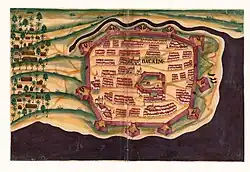
The seven islands of Bombay were presented to the English Crown in 1661, as part of the dowry of Catherine Braganza to Charles II of England, who in turn leased the area to the English East India Company.
In 1683, the Maratha Empire invaded Portuguese settlements in the Konkan region. Following Maratha victories in the Battle of Vasai and Siege of Ponda, the Marathas would then besiege Goa. The conflict ended following the 1684 Treaty of Ponda.

Kollam (Quilon) was a prominent seaport and became a Portuguese settlement in 1519. They built a cemetery at Tangasseri in Quilon city. After the Dutch East India Company invasion, the Dutch also buried their dead there. The pirates of Tangasseri inhabited the cemetery before Europeans arrived. Remnants of this cemetery still exist today, very close to Tangasseri Lighthouse and St Thomas Fort, which are listed among the protected monuments in the Archaeological Survey of India.[49][50][51][52]
18世紀
北方省的大部分,包括英屬印度孟買附近的塔納、巴塞因(今瓦賽)與喬爾,在1739年另一次馬拉塔人入侵巴塞因後喪失。果亞、達曼及第烏以及安吉第烏島,則因一支葡萄牙印度艦隊自里斯本抵達,並載有新任總督,得以保全。
1752年,莫三比克自印度國分離,另立總督。
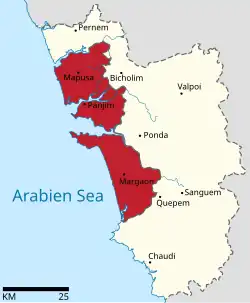
經歷戰敗與失地後,葡萄牙人於1763年至1788年間擴張果亞領土,從庫達爾德賽、松達人,以及錫爾瓦薩的邦斯勒家族/馬拉塔人手中取得新領地,這些地區後來被稱為新征服地(Novas Conquistas)。[6]: 321 1759年,龐巴爾侯爵下令將耶穌會逐出葡萄牙領土。[6]: 325 取代耶穌會的,是本地果亞天主教修會「司鐸祈禱會」;該修會由改宗基督宗教的婆羅門與剎帝利人士創立。同時,一所專為本地菁英提供世俗教育的學院開辦,果亞宗教裁判所也遭廢除。[6]: 325 在龐巴爾影響下,若澤國王宣布本地基督徒與歐洲人具有同等地位;埃加伯爵副王則宣布宗教自由,並禁止種族誹謗。基於這些原因,「龐巴爾及其合作者至今仍是果亞相當受尊敬的人物」。[6]: 326
1783年,葡萄牙船隻「聖安娜號」遭攻擊後,馬拉塔人將達德拉與納加爾哈維利移交葡萄牙控制。1785年,葡萄牙又購得達德拉。1818年馬拉塔聯盟瓦解後,葡萄牙在納加爾哈維利的統治地位已無人爭議。

平托陰謀,又稱平托起義,是1787年果亞反抗葡萄牙統治的叛亂。[53]這場陰謀的領袖,是巴德斯郡坎多利姆村出身的三名著名神父。他們屬於羅馬天主教婆羅門貴族平托家族,因此這場叛亂得名為平托起義。[54]此事被視為印度最早的反殖民起義之一,也是歐洲各殖民地中最早由天主教臣民發動的反殖民起義之一。
19世紀
1799年至1813年間,果亞曾短暫成為英國保護地。原因是英國得到了法國計畫佔領果亞的軍事情報,這促使駐加爾各答的英屬印度總督韋爾斯利侯爵派兵進駐。[55]葡萄牙總督法蘭西斯科·安東尼奧·達·韋加·卡布拉爾則設法保住對民政機構的控制;他正式任命負責佔領事務的英國軍官威廉·克拉克爵士,為其權限下葡萄牙駐果亞部隊的司令。[6]: 330

1843年,首府遷至潘吉姆(葡萄牙語:Nova Goa,即新果亞);該地正式成為印度國的行政中心,取代韋利亞果亞舊城。雖然早在1759年12月1日,總督已遷駐潘吉姆。1844年,葡屬印度總督停止管轄澳門、索洛島與帝汶。自此以後,印度國的領土才限於印度次大陸本身。
第二次世界大戰
第二次世界大戰期間,葡萄牙保持中立。因此,戰事爆發後,軸心國船隻為避免遭英軍擊沉或俘獲,轉而前往果亞避難。德國商船「埃倫費爾斯號(Ehrenfels)」、「德拉亨費爾斯號(Drachenfels)」與「布勞恩費爾斯號(Braunfels)」,以及一艘義大利船隻,均停泊於莫爾穆岡港。「埃倫費爾斯號」其後開始向在印度洋活動的U艇傳送盟軍船隻動向,對盟軍航運造成嚴重損害。
由於果亞宣稱中立,英國皇家海軍無法對這些船隻採取正式行動。因此,英國特別行動執行處的印度任務單位支援了一次祕密突襲,參與者為加爾各答輕騎兵隊成員;該部隊由無法服一般軍役的平民組成,屬於非全職單位。輕騎兵隊登上一艘老舊的加爾各答河船「菲比號(Phoebe)」,繞行印度至果亞,並在當地擊沉「埃倫費爾斯號」。其後,英方又發出一則未加密無線電訊息,宣稱將奪取該地。該假訊息使其他軸心國船員擔心船隻將被英軍奪取,遂自行鑿沉其船。
該次突襲後來由詹姆斯·利索在《登船隊》(Boarding Party)一書中記述。由於突襲者違反葡萄牙中立地位,可能引發政治後果,此事一直保密,直到該書於1978年出版後才公開。[56]1980年,這段故事又被改編為電影《海狼突擊隊》,由格格里高利·派克、大衛·尼文與罗杰·摩尔主演。
1945年至1961年

1954年7月24日,一個名為「果亞人聯合陣線」的組織控制了達德拉飛地。1954年8月2日,納加爾哈維利則被「自由果曼塔克黨」奪取。[57]海牙國際法院隨後就葡萄牙進入達德拉與納加爾哈維利的權利作出判決,但該判決並未打破雙方僵局。[58]
自1954年起,在果亞以外反對葡萄牙統治的非暴力抗議者,遭到強力武力鎮壓。[59]多起內部反抗也被平息,領導人遭法外殺害或監禁。結果,印度與葡萄牙斷絕外交關係,關閉其駐潘吉姆總領事館,[60]並要求葡萄牙關閉其駐新德里代表處。[61]印度也對葡屬印度各地實施經濟禁運。[62]1955年至1961年間,印度政府採取外交上的「觀望等待」方針,多次向葡萄牙薩拉查獨裁政權交涉,並試圖在國際社會面前凸顯去殖民化問題。[63]
為便利人員與貨物往返印度境內各葡萄牙飛地,薩拉查獨裁政權設立葡屬印度航空運輸公司,[64]並在果亞、達曼與第烏興建機場。
1961年12月,印度入侵葡萄牙剩餘屬地。[65]葡萄牙部隊奉命抵抗,不應戰者死。1961年12月19日,葡屬印度總督簽署降書,至此結束葡萄牙在印度長達450年的統治。[66]
併入印度

新領土之地位
達德拉-納加爾哈維利自由邦自1954年脫離葡萄牙統治後,至1961年併入印度共和國以前,均以事實上獨立的政治實體存在。[67]
繼達德拉-納加爾哈維利被印度兼併後,果亞、達曼與第烏成為印度的新聯邦屬地。1961年12月19日,昆希拉曼·坎德斯少將被任命為果亞、達曼與第烏軍政長官。1963年,果亞舉行首次立法議會選舉。
1967年,在以傑克·德·塞凱拉為首的運動人士提議下,果亞舉行民意投票,由選民決定是否將果亞併入以馬拉地語人口佔多數的馬哈拉什特拉邦。其後,在反對由達亞南德·班多德卡爾領導的馬哈拉施特拉瓦迪果曼塔克黨的康坎語抗爭中,親康坎派最終勝出。[68]然而,果亞並未立即取得完整邦地位;直到1987年5月30日,果亞才成為印度聯邦第25個邦。而達曼與第烏縣則自原果亞、達曼與第烏聯邦屬地分出,繼續作為聯邦屬地行政。[69]
1961年後,原葡屬印度最顯著的變化,是引入民主選舉,並以英語取代葡萄牙語,作為政府與教育的一般用語。[70]經過多年康坎語抗爭後,以天城文書寫的康坎語,終於在1987年成為果亞、達曼與第烏聯邦屬地的官方語言。[71]印度方面允許若干葡萄牙制度維持不變,其中包括村社共有地制度(comunidades)。依此制度,土地由鄰里共同體持有,再出租予個人使用。印度政府治下的果亞亦保留果亞與達曼的葡萄牙民法典,未作變更;因此,這些地區至今仍是印度境內少數適用不依宗教區分之共同民法典的地區。[72]
公民身分
1955年《公民身分法》賦予印度政府界定印度聯邦公民身分之權限。印度政府據此於1962年3月28日頒布《果亞、達曼與第烏公民身分令》,規定凡於1961年12月20日以前在果亞、達曼與第烏出生者,均視為印度公民。[73]
印度—葡萄牙關係

葡萄牙薩拉查獨裁政權不承認印度對遭兼併領土的主權,並為該等領土設立流亡政府;[74]此後,這些領土的代表仍繼續出席葡萄牙國民議會。[75]1974年康乃馨革命後,葡萄牙新政府承認印度對果亞、達曼與第烏的主權,[76]兩國遂恢復外交關係。1975年6月24日,葡萄牙公布《第308-A/75號法令》,規定原葡屬印度居民之葡萄牙國籍保留問題。[77]1994年,葡萄牙在果亞設立總領事館。[78]
行政

自1505年葡屬印度建立,至1961年廢止為止,印度國最高權力通常由一名稱為總督或副王的官員掌握,任期多為三年。初期,其權限涵蓋好望角以東所有葡萄牙王室領地。在葡萄牙君主制存續期間,「副王」一銜作為較高榮銜授予;不過,其實際職責仍與總督相同。[6]: 159 總督同時身兼最高軍事指揮官與行政官,因此權限涵蓋軍隊、外交、貿易、財政與人事管理等事項。[6]: 161 另外,新任總督在離開葡萄牙以前,會收到一份稱為「訓令(regimento)」的書面命令與施政目標。[6]: 161 副王常試圖影響重要職位的人選,使其政治盟友得以出任;然而,最終決定權仍掌握在葡國中央手中。許多副王赴任時,都有私人隨從同行,其中往往包括其子,並讓他們擔任重要軍職;副王法蘭西斯科·德·阿爾梅達之子洛倫索·德·阿爾梅達,出任印度海域總船長,即為一例。果亞被征服後,總督或副王居於希達爾康宮(Palácio do Hidalcão);該宮原為當地印度宮殿,由果亞前統治者阿迪爾汗興建。[6]: 161
印度國最重要的行政架構於16世紀建立,其中包括高等法院(relação)、由王室任命之財政監督官(vedor)掌理的財政監督署(vedoria da fazenda)、財政帳務署(casa dos contos),以及軍籍與給養署(casa da matrícula)。[6]: 161
然而,葡萄牙屬地極為分散,這使印度國高度分權。[6]: 160 遠離果亞的各要塞長官、總督轄區下的總長官或市政議會,往往掌握相當大的權力。與總督及副王相同,要塞長官任期通常為三年,但可連任;安汶總船長桑喬·德·瓦斯孔塞洛斯便任職長達十九年。[6]: 160 在最重要的長官轄區中,財政權由財政監督官掌握,司法權則歸屬於司法官(ouvidor)。

教會在印度國中扮演重要角色。教宗曾授予葡萄牙國王對其海外屬地的排他性教會保護權,即葡萄牙保教權(Padroado)。1513年後,葡萄牙東方屬地隸屬於設在馬德拉島的豐沙爾主教區。1557年後,果亞成為總主教駐地,並以科欽與馬六甲兩個主教區為其從屬教區。[6]: 163 其後,澳門於1576年、府內於1588年又分別設立主教座。奧斯定會、方濟會、道明會與耶穌會等修會,則在果亞設立傳教總部,使天主教會在印度國首府具有極為顯著的存在與影響力。果亞也因此獲得「東方羅馬」之稱,並為許多外國旅行者所提及。[6]: 163
最重要的聚落設有市政議會(câmara),並享有與葡萄牙本土同等城市相近的特許狀;這些市政議會在行政上扮演重要角色,因為它們是定居者得以表達意見、使其聲音被聽見的唯一制度渠道。[6]: 164 這些機構負責地方自治,可徵收若干市政稅,並作為第一審法院運作。[6]: 164 它們有時也會向副王提供借款,不過雙方合作往往並不容易。[6]: 164 葡萄牙商人也常在非王室直轄聚落中,依自身倡議設立市政議會;其中最重要的例子,便是澳門議事公局(Leal Senado)。
除葡萄牙人本身外,印度國也常統治非葡萄牙、且非基督宗教的人群;在這類情形下,傳統本地制度往往被保留下來。阿方索·德·阿爾布克爾克攻取果亞後,當地印度教居民仍得保有其土地;葡萄牙統治以前的村社土地所有與行政制度也被加以成文化,婆羅門或剎帝利村社股權人的權利則獲得承認,稅收徵集交由印度教徒蒂莫賈負責,其後又由長期任職的克里希納·拉奧接續辦理。[6]: 164 在忽里模子,阿爾布克爾克則讓當地穆斯林國王在保護國體制下,繼續擔任主要行政長官。[6]: 164 隨著歐洲反宗教改革運動日益高漲,唐·康斯坦丁諾·德·布拉干薩任內,婆羅門被排除於葡萄牙行政體系之外,結果引發一波改宗浪潮。[6]: 165
經濟與貿易

Trade had been one of the primary motivations behind the Portuguese expansion overseas, and one of the main objectives behind the foundation of the State of India was to take over the Europe-Asia trade, up to that point conducted mainly through the Red Sea and the Persian Gulf, redirecting it around Africa via the Cape Route. Trade was processed either by the Crown through royal agents (feitores) working from royal trade posts (feitorias) and maintained by the royal finances, or by independent merchants, either Portuguese or otherwise.
One of the main tasks of royal factors was to acquire spices to be shipped back to Europe. In 1503, the Portuguese unloaded at Lisbon 30,000 quintals of spices, more than what the Venetians introduced in the European market through Alexandria in Egypt.[6]: 150 The overwhelming bulk of commodities imported to Europe by the Portuguese consisted of black pepper, which after 1520 was declared an official Crown monopoly.[6]: 150 The Portuguese acquired most of their pepper in Kerala or Kanara in India. For most of the century, the Portuguese secured an overwhelming share of the pepper imports into Europe, supplying 75 per cent or more of Europes pepper.[6]: 152 The Crown declared a monopoly on their commodities, such as cloves, nutmeg, mace, cinnamon, ginger, silk, pearls and the export of gold and silver bullion from Portugal to Asia.

The Portuguese Crown instituted a number of official carreiras, literally meaning "runs", connecting Goa to major Portuguese and non-Portuguese harbours around the Indian and Pacific oceans once a year. Initially conducted through Crown vessels, after 1560, the Crown began leasing them to private contractors, and by the late 16th century they were the norm.[6]: 155 By 1580, the value of inter-Asian trade rights leases reached as high as two million cruzados - twice the value the Portuguese Crown earned from the Goa-Lisbon trade.[6]: 155

Portugal regulated and rerouted the Indian Ocean trade by imposing a system of safe-passes called cartaz.[6]: 156 It was imposed most effectively on the west coast of India.[6]: 156 The Portuguese Crown also collected high customs dues, most importantly at Goa, Hormuz, Malacca, Bassein and Diu, and in the 1580s it accounted for over 85% of the viceroys revenue.[6]: 156
Independent Portuguese merchants got involved in the inter-Asian trade, and the backbone of informal Portuguese presence and trade in Asia was formed of Eurasian merchants, descending from Portuguese soldiers or merchants married to local wives.[6]: 173 Their main hub of activities was the capital of Goa, where the largest community of casados ("married men") was located at, about 2,000 families.[6]: 175 The core element of their trade was Gujarati cotton textiles, but they also dealt in Kerala pepper, cinnamon from Sri Lanka, Kanara rice, diamonds from southern India and larins from Persia.[6]: 175 By 1520 they had penetrated almost every commercially relevant region in Asia aside from Japan (which was reached in the 1540s). Macau was founded by independent Portuguese traders. The Crown regulated their trade into a number of convoys for safety against pirates, the most important of which were those which transported textiles from Gujarat to Goa and rice from Kanara to Goa.[6]: 175 The second most important settlement of Portuguese merchants in India was Cochin, where 500 casados with their families resided.[6]: 176 Diu had a casado population of about 200.[6]: 177
Portuguese India Company was established in 1628, however with the Crown being its only major shareholder, it was liquidated five years later.[6]: 153 By that point, Portugal's share of pepper trade had fallen behind those of the Dutch VOC and the English EIC.[6]: 153
Portuguese trade was greatly reduced by the war with the Dutch VOC, with whom a peace treaty was signed in 1663. Inter-Indian Portuguese convoys continued, mainly with Gujarat, Porto Novo and Madras.[6]: 310 Indian cottons became the bedrock of exports from Portuguese India, while tobacco grown in Portuguese Brazil became the most important commodity exported across Asia via Portuguese India till the 19th century.[6]: 306 New Portuguese East India Companies established in 1669 and 1685 failed, largely due to disagreements between the Crown and the merchants over the nature of the enterprise and lack of confidence from investors.[6]: 153 By the 18th century, tobacco, bullion, firearms, consumer goods such as Madeira wine and books represented the most important items traded in Portuguese India, while exports back to Europe included silks, spices, porcelain, precious stones, Indian cottons and high quality lacquered furniture, a good proportion being unloaded at Bahia in Brazil.[6]: 153 Indian cottons were especially valuable in Mozambique, where an important community of Indians from Diu or Daman came to reside. Nevertheless, Goa effectively became a commercial satellite of British Bombay. Many Indo-Portuguese merchants became deeply involved and prominent in French Pondicherry, Danish Tranquebar and especially British Madras, Calcutta and Bombay, Portuguese Jews being linked to the diamond trade in Madras.[6]: 312
社會與文化

印度國大體上以城市據點為主;其存在目的,在於提供防衛完善的港灣據點,以經營、控制並主導貿易與交通聯絡。故在其屬地之中,只有果亞、達曼、巴塞因、喬爾與可倫坡等地,擁有較具實質意義的腹地與農村人口。[6]1500年,卡利卡特商館內的葡萄牙人遭屠殺後,印度國幾乎每一處屬地皆加以設防,其中有些更構築了大規模防禦工事。也正因如此,印度國既像一張海上交通網絡,也像一道由眾多堡壘構成的巨大防衛圈。[6]: 147
葡屬印度孕育出一個在官方上屬於基督教與歐洲性質的社會,但這個社會也受到其所處非歐洲環境的影響。社會金字塔頂端,是出生於歐洲的總督、官員與神職人員;其下則為葡萄牙已婚定居者及其歐亞混血後裔,這些人可能是富裕商人,也可能在地方市政議會(câmara)中擔任重要職務;最後則是本地人。17世紀葡屬印度發展至高峰時,整個印度國的葡萄牙已婚定居者總數,可能約有5500人。[6]: 148 許多葡萄牙已婚定居者過著一種在外國訪客眼中相當悠閒、且以歐洲標準而言頗為奢華的生活。他們之中,有些人居住在依印度風格陳設的華宅中,家中僕役眾多,飲食豐盛而多樣,包括各類水果與禽肉,並使用中國瓷器進食。果亞的葡萄牙已婚定居者常穿襯衫與白色長褲,其妻子則通常穿著紗麗。[6]: 148

除要塞之外,教堂與其他教會建築也主導了多數葡萄牙聚落的天際線,果亞尤為明顯。這使城市帶有鮮明的歐洲與天主教色彩,也使教會在當地社會中具有相當突出的地位。[6]1630年,好望角以東地區約有1800名神職人員,其中約600人集中於果亞。[6]然而,在印度國各葡萄牙聚落中,歐洲人與信奉基督宗教的歐亞混血社群始終只佔少數;即使在果亞,其比例可能也不超過7%。其餘人口則包括印度教徒、印度基督徒、其他亞洲人與非洲人,既有自由人,也有奴隸。[6]
由於上述種種原因,印度國雖遠離歐洲,卻在文化上呈現混合性。教堂立面與內部裝飾融合了葡萄牙與亞洲的圖像傳統;家庭生活也同樣折衷於東西方之間,家具、服飾與飲食往往較接近亞洲風格,而非葡萄牙風格。[6]: 149
郵政史

葡屬印度早期郵政史較為模糊;不過,已知自1825年起,當地與里斯本之間已有定期郵件往來。由於葡萄牙與大不列顛訂有郵政協定,許多郵件很可能經由孟買轉運,再由英國包船承載。1854年果亞設立郵局後,開始出現葡萄牙郵戳。
葡屬印度最後一次常規郵票發行是1960年6月25日,以航海家亨利王子逝世500週年為主題。1961年12月29日,印度郵票首次在當地使用,但舊郵票仍獲准持續使用直至1962年1月5日。此後,葡萄牙雖仍繼續發行以葡屬印度為主題的郵票,但因印度實際控制該地,該郵票並未在當地發行,故不被視為有效郵票。
1961年12月22日至1962年1月4日,當地仍容許雙重貼票;殖民地時期的葡萄牙郵戳,則一直容許使用至1962年5月。


圖集

-
 Indo-Portuguese illustration of a Portuguese nobleman and Christian Indian women, from the Códice Casanatense.
-
 16th century Indo-Portuguese illustration of the main deities of Hinduism at the Códice Casanatense.
-
 16th century Indo-Portuguese illustration of a Hindu marriage at the Códice Casanatense.
-
 16th century Indo-Portuguese illustration of Saint Thomas Christians at the Códice Casanatense.
-
 16th century Indo-Portuguese illustration of Kanarese peasants at the Códice Casanatense.
-
 18th century Indo-Portuguese cabinet
-
 Indo-Portuguese cabinet
-
 Indo-Portuguese writing cabinet
-
 Indo-Portuguese furniture
-
 Indo-Portuguese pistol
-
 17th century Indo-Portuguese Christian ivory.
貨幣
| ½ Tanga (1903) | |
|---|---|

| |
| Obverse: Lettering "CARLOS I REI DE PORTUGAL MCMIII", portrait of King Carlos I. | Reverse: Lettering "INDIA PORTUGUEZA ½ TANGA", coat of arms of Portuguese India. |
| 800,000 coins minted, bronze. Engraver Valancio Alves. | |
| 1 Escudo (1959) | |
|---|---|

| |
| Obverse: Lettering "ESTADO·DA·INDIA", face value with Coat of arms of Portuguese India in the center. | Reverse: Lettering "REPÚBLICA · PORTUGUESA", year and Coat of arms of Portugal in the center. |
| 6,000,000 coins minted. This coin was from State of India. | |
-
 20 Portuguese bazarucos from 1799, reverse.
-
 20 Portuguese bazarucos from 1799, obverse.
-
 1866 1/8 tanga.
-
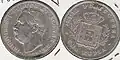 1 Portuguese India rupia, 1882.
-
 1947 escudo coin.
-
 1959 100 escudos.
-
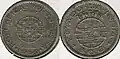 60 Portuguese India centavos, 1959.
-
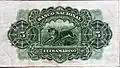 1938 5 rupias banknote reverse.
-
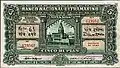 1938 5 rupias banknote obverse.
建築
-
 Indo-Portuguese house
-
 Portuguese villa
-
 Sé Cathedral, Goa
-
 The church of Our Lady of the Immaculate Conception in Panaji (Goa, India).
-
 Old Goa, Church of Lady of Rosary
-
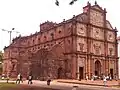 Bom Jesus Basilica, Goa.
-
 House in Goa.
-
 House in Goa.
-
 Governors palace in Diu.
-
 Church of São Paulo in Diu.
參見
參考來源
- ^ Parsi-Zoroastrian Settlement of the Konkan & Thana. www.heritageinstitute.com.
- ^ Shokoohy, Mehrdad. The Zoroastrian Fire Temple in the Ex-Portuguese Colony of Diu, India. Journal of the Royal Asiatic Society. 2003, 13 (1): 1–20. JSTOR 25188328.
- ^ Fischel, Walter J. Leading Jews in the Service of Portuguese India
 . The Jewish Quarterly Review. 1956, 47 (1): 37–57. JSTOR 1453185. doi:10.2307/1453185.
- ^ R.S. Whiteway, (1899) Rise of Portuguese Power in India, p.224 互联网档案馆的存檔,存档日期14 July 2023.
- ^ De Souza, Teotonio R. Goa Through the Ages. Goa University Publications Series No. 6. 2: An Economic History. New Delhi: Concept Publishing Company. 1990: 214 [8 May 2022]. ISBN 978-81-7022-259-0. (原始内容存档于14 July 2023).
- ^ 6.00 6.01 6.02 6.03 6.04 6.05 6.06 6.07 6.08 6.09 6.10 6.11 6.12 6.13 6.14 6.15 6.16 6.17 6.18 6.19 6.20 6.21 6.22 6.23 6.24 6.25 6.26 6.27 6.28 6.29 6.30 6.31 6.32 6.33 6.34 6.35 6.36 6.37 6.38 6.39 6.40 6.41 6.42 6.43 6.44 6.45 6.46 6.47 6.48 6.49 6.50 6.51 Disney, A. R. A History of Portugal and the Portuguese Empire 2. Cambridge University Press. 2009. ISBN 978-0-521-40908-7.
- ^ https://search.library.wisc.edu/catalog/9910022422902121
- ^ Treaty Between the Government of India and the Government of the Republic of Portugal on Recognition of India's Sovereignty over Goa, Daman, Diu, Dadra and Nagar Haveli and Related Matters. www.commonlii.org. 1974 [15 April 2020]. (原始内容存档于3 December 2013).
- ^ India and Portugal Resume Ties After 19 Years. The New York Times. 1 January 1975: 3 [24 March 2025].
- ^ Ernst Georg Ravenstein (编). A Journal of the First Voyage of Vasco da Gama, 1497-1499. Ashgate. 2016 [1898].
- ^ Narayanan, M. G. S. Calicut: The City of Truth Revisited. Calicut University Publications. 2006: 198 [2 December 2020]. ISBN 978-81-7748-104-4. (原始内容存档于14 July 2023).
- ^ The incident is mentioned by Camões in The Lusiads, where it is stated that the Zamorin "showed no signs of treachery" and that "on the other hand, Gama's conduct in carrying off the five men he had entrapped on board his ships is indefensible".
- ^ 13.0 13.1 13.2 Diffie, Bailey W.; Winius, George D. Foundations of the Portuguese Empire, 1415-1580. University of Minnesota Press. 1977.
- ^ Chalmers, Alexander. English Translations: From Modern and Ancient Poems. J. Johnson. 1810 [4 May 2021]. (原始内容存档于14 July 2023) (英语).
- ^ Pulicat & the Forgotten Indian Slave Trade. Live History India. [24 September 2021]. (原始内容存档于14 July 2023) (美国英语).
- ^ Sreedhara Menon, A. A Survey of Kerala History. Kottayam: D. C. Books. 1967: 152.
- ^ Correa, Gaspar. The Three Voyages of Vasco da Gama, and His Viceroyalty. 由Henry E.J. Stanley翻译. London: The Hakluyt Society. 1869.
- ^ 18.0 18.1 18.2 18.3 18.4 18.5 Logan, William. Malabar Manual. Asian Educational Services. 2000 [18 June 2015]. ISBN 978-81-206-0446-9. (原始内容存档于14 July 2023).
- ^ Danvers, Frederick Charles. The Portuguese in India: Being a History of the Rise and Decline of their Eastern Empire 1. New Delhi: Asian Educational Services. 1988.
- ^ Luís Filipe Ferreira Reis Thomaz (1994): De Ceuta a Timor 互联网档案馆的存檔,存档日期14 July 2023. p.240
- ^ Luís Filipe Ferreira Reis Thomaz (1994): De Ceuta a Timor 互联网档案馆的存檔,存档日期14 July 2023. p.248
- ^ Roger Crowley (2015): Conquerors: How Portugal Seized the Indian Ocean and Forged the First Global Empire p. 288. Faber & Faber. London.
- ^ Sanceau, 1936, p.235-236
- ^ Andrade, Frazer. Goa History: The Misericórdia Hospital, From 16th-Century Charity to a 1905 Landmark. O Heraldo. 2025-08-23 [2025-09-20].
- ^ Sanceau, 1936, p.298
- ^ Crowley, 2015, p.356
- ^ Albuquerque, Afonso de; Birch, Walter de Gray. The commentaries of the great Afonso Dalboquerque, second viceroy of India. London : Printed for the Hakluyt society. 21 September 1875 –通过Internet Archive.
- ^ Luís Filipe Ferreira Reis Thomaz (1994): De Ceuta a Timor 互联网档案馆的存檔,存档日期14 July 2023. p. 249
- ^ 29.0 29.1 Neill, Stephen. A History of Christianity in India: The Beginnings to AD 1707. Cambridge: Cambridge University Press. 1984.
- ^ Medonça, Délio de. Conversions and Citizenry: Goa Under Portugal, 1510-1610. Concept Publishing Company. 2002.
- ^ Monteiro, Armanda da Silva Saturnino. Portuguese Sea Battles. II: Christianity, Commerce and Corso, 1522-1538. Oeiras: Saturnino Monteiro. 2014.
- ^ Machado, Everton V. Hyperidentity and Orientalism: The Case of the Sieges of Diu in Portuguese Texts. South Asian Studies. 2018, 34 (1): 6–16. doi:10.1080/02666030.2018.1440056.
- ^ Maranhão, Francisco dos Prazeres. Diccionario geographico abreviado de Portugal e suas possessões ultramarinas : no qual se dá noticia de todas as cidades, villas, e freguezias, de Portugal, com sua população, legoas de distancia, correios, e feiras principaes : seus rios, montanhas, portos, &c. : e juntamente se descrevem todas as ilhas, e porções continentaes, animaes, minas, rios, portos, commercio, &c. &c.. Porto: Na typographia de Sebastião José Pereira. 1852: 102 (葡萄牙语).
- ^ Dyson, Tim. A Population History of India: From the First Modern People to the Present Day. Oxford: Oxford University Press. 2018.
- ^ Glenn, Ames. Portugal and its Empire, 1250–1800 (Collected Essays in Memory of Glenn J. Ames. The Portuguese Studies Review at Trent University Press. : 12–15.
- ^ Walker, Timothy D. Contesting Sacred Space in the Estado da India: Asserting Cultural Dominance over Religious Sites in Goa. Ler História. 2021, (78): 111–134 [26 August 2021]. ISSN 0870-6182. doi:10.4000/lerhistoria.8618
 . (原始内容存档于26 August 2021) (英语).
- ^ António José Saraiva. The Marrano Factory: The Portuguese Inquisition and Its New Christians 1536-1765. BRILL Academic. 2001: 348. ISBN 90-04-12080-7.
- ^ Cuoto, Maria Aurora. Goa: A Daughter's Story. Penguin Books. 2005: 109–121, 128–131.
- ^ Maynard, Theodore. The Odyssey of Francis Xavier. London: Longmans, Green and Co. 1936.
- ^ Benton, Lauren. Law and Colonial Cultures: Legal Regimes in World History, 1400-1900. Cambridge: Cambridge University Press. 2002. ISBN 0521804140.
- ^ Goa Inquisition. New Indian Express. 3 September 2015 [28 October 2021]. (原始内容存档于28 October 2021).
- ^ Tony Jaques (编). Dictionary of Battles and Sieges: A Guide to 8,500 Battles from Antiquity Through the Twenty-first Century. 1 (A–E). Greenwood. 2007. ISBN 978-0-313-33537-2.
- ^ Barrett, Greg. An exploration of the role of Portugal in the economic integration of Asia and Europe with a focus on the pepper market. Academia. [17 April 2022]. (原始内容存档于17 April 2022).
- ^ Goa Museum – Government of Goa. [17 April 2022]. (原始内容存档于1 August 2020).
- ^ Goa Printing Press. [17 April 2022]. (原始内容存档于6 June 2017).
- ^ Priolkar, Anant Kakba. The Printing Press in India - Its Beginnings and Early Development. Mumbai: Marathi Samshodhana Mandala. 1958.
- ^ Pearson, M.N. The New Cambridge History of India: The Portuguese in India. Cambridge: Cambridge University Press. 1988: 92–93.
- ^ Pearson, p. 56–59.
- ^ Colonial Voyage – Tangasseri. Mathrubhumi. [9 January 2014]. (原始内容存档于21 February 2016).
- ^ Tangasseri – OOCITIES. OOCITIES. [9 January 2014]. (原始内容存档于9 January 2015).
- ^ Archaeological site and remains. Archaeological Survey of India – Thrissur Circle. [9 January 2014]. (原始内容存档于4 June 2013).
- ^ Tangasseri: A Brief History. Rotary Club of Tangasseri. [9 January 2014]. (原始内容存档于22 November 2013).
- ^ CM PLACES WREATH AT PINTO'S REVOLT MEMORIAL. goemkarponn.com. 13 December 2022.
- ^ 'Pinto Revolt' murals to adorn Candolim road. The Times of India. 23 December 2016 –通过The Economic Times - The Times of India.
- ^ Catalogue Description: 'The British Occupation of the Portuguese Settlements in India, Goa, Diu, Damaun,.... discovery.nationalarchives.gov.uk. The National Archives. [31 May 2018]. (原始内容存档于10 July 2022).
- ^ Leasor, J. Boarding Party. London: Heinemann. 1978 [17 April 2022]. ISBN 0-434-41026-8. OCLC 4191743. (原始内容存档于7 August 2020).
- ^ Mascarenhas, Lambert. Goa's Freedom Movement. (原始内容存档于14 February 2012).
- ^ CASE CONCERNING RIGHT OF PASSAGE OVER INDIAN TERRITORY (MERITS): Judgment of 12 April 1960 (PDF). 22 December 2011. (原始内容 (PDF)存档于22 December 2011).
- ^ Singh, Satyindra. Blueprint to Bluewater, The Indian Navy, 1951–65 (PDF). 1992. (原始内容 (PDF)存档于6 July 2006).
- ^ Ali, B. Sheikh. Goa Wins Freedom: Reflections and Reminiscences. Goa University. 1986: 154 [2 December 2020]. ISBN 978-81-85571-00-3. (原始内容存档于14 July 2023).
- ^ Esteves, Sarto. Goa and Its Future. Manaktalas. 1966: 88 [2 December 2020]. (原始内容存档于15 April 2022).
- ^ Prabhakar, Peter Wilson. Wars, Proxy-wars and Terrorism: Post Independent India. New Delhi: Mittal Publications. 2003: 39 [2 December 2020]. ISBN 978-81-7099-890-7. (原始内容存档于14 July 2023).
- ^ Lambert Mascarenhas, "Goa's Freedom Movement," excerpted from Henry Scholberg, Archana Ashok Kakodkar and Carmo Azevedo, Bibliography of Goa and the Portuguese in India New Delhi, Promilla (1982). (原始内容存档于14 February 2012).
- ^ De Souza, Teotonio R. Goa Through the Ages. Goa University Publications Series No. 6. 2: An Economic History. New Delhi: Concept Publishing Company. 1990: 276 [2 December 2020]. ISBN 978-81-7022-259-0. (原始内容存档于14 July 2023).
- ^ The Liberation of Goa: 1961. Bharat Rakshak, a Consortium of Indian Military Websites. (原始内容存档于28 August 2006).
- ^ Dossier Goa – A Recusa do Sacrifício Inútil. Shvoong.com. [9 February 2009]. (原始内容存档于17 January 2017).
- ^ Gupta, K. R. Amita; Gupta, Amita. Concise Encyclopaedia of India. Delhi: Atlantic Publishers & Distributors. 2006: 1214 [2 December 2020]. ISBN 978-81-269-0639-0. (原始内容存档于14 July 2023).
- ^ But Not Gone. Time. 27 January 1967. (原始内容存档于15 December 2008).
- ^ Boland-Crewe, Tara; Lea, David. The Territories and States of India. Routledge. 2 September 2003: 25 [2 December 2020]. ISBN 978-1-135-35625-5. (原始内容存档于14 July 2023).
- ^ Miranda, Rocky V. Konkani. Jain, Danesh; Cardona, George (编). The Indo-Aryan Languages. Abingdon, Oxon: Routledge. 2007: 735 [2 December 2020]. ISBN 978-1-135-79711-9. (原始内容存档于14 July 2023).
- ^ The Goa, Daman and Diu Official Language Act, 1987 (PDF), Manual of Goa Laws III: 487–492, [9 July 2019], (原始内容存档 (PDF)于9 July 2019)
- ^ Portuguese Civil Code is No Model for India. The Times of India. TNN. 28 November 2009 [17 November 2020]. (原始内容存档于5 August 2020).
- ^ Gangadhar Yashwant Bhandare vs Erasmo Jesus De Sequiria. manupatra. [3 June 2009]. (原始内容存档于4 March 2016).
- ^ Goa To Have An Exile Government. The Age. 5 January 1962: 4.
- ^ Asian Recorder 8: 4490, 1962 [2 December 2020], (原始内容存档于14 July 2023)
- ^ Treaty on Recognition of India's Sovereignty over Goa, Daman and Diu, Dadar and Nagar Haveli Amendment, 14 Mar 1975. mea.gov.in. [2 May 2016]. (原始内容存档于9 May 2016).
- ^ Barbosa, Alexandre Moniz. Portuguese Nationality is Fundamental Right by Law. The Times of India. 15 January 2014 [17 November 2020]. (原始内容存档于28 November 2021).
- ^ Portuguese Citizens Cannot Contest Polls: Faleiro. The Hindu. 18 December 2013 [17 November 2020]. (原始内容存档于12 January 2017).
- ^ Leupp, Gary P. Interracial Intimacy in Japan. Continuum International Publishing Group. 2003: 35. ISBN 978-0-8264-6074-5.
延伸閱讀
| 關於葡屬印度 的圖書館資源 |
- Andrada (undated). The Life of Dom John de Castro: The Fourth Vice Roy of India. Jacinto Freire de Andrada. Translated into English by Peter Wyche. (1664). Henry Herrington, New Exchange, London. Facsimile edition (1994) AES Reprint, New Delhi. ISBN 81-206-0900-X.
- Panikkar, K. M. (1953). Asia and Western dominance, 1498–1945, London: G. Allen and Unwin.
- Panikkar, K. M. (1929) Malabar and the Portuguese: being a history of the relations of the Portuguese with Malabar from 1500 to 1663
- Priolkar, A. K. The Goa Inquisition (Bombay, 1961).
- Declercq, Nico F. Chapter 41: Fortresses and settlements in Goa and Sri Lanka and the appearance of Iberian names. The Desclergues of la Villa Ducal de Montblanc. Nico F. Declercq. 2021: 691–696. ISBN 978-90-831769-0-1.
外部連結


- ColonialVoyage.com – 葡萄牙人和荷蘭人在錫蘭、印度、馬六甲、孟加拉、福爾摩沙(臺灣)、非洲、巴西的歷史。
- 葡文葡屬印度總督與印度長官傳記條目(1550—1640) – 葡萄牙擴張百科全書(PDF)