木兰类植物
木兰类植物
| |
|---|---|
| 木兰类成员;左至右,上至下依次为:林仙、蜡梅、天女木兰、鱼腥草、胡椒、樟树 | |
科学分类 
| |
| 界: | 植物界 Plantae |
| 演化支: | 维管植物 Tracheophyta |
| 演化支: | 被子植物 Angiosperms |
| 演化支: | 核心被子植物 Mesangiospermae |
| 演化支: | 木兰类植物 Magnoliids APG, 2003 |
| 目 | |
| |
| 異名 | |


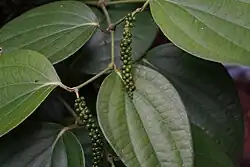

木兰类(英語:magnoliids)是被子植物的一个演化支。该类群包含玉兰、香樟、鳄梨、胡椒、鱼腥草、番荔枝、马兜铃等一万余种植物,是继真双子叶植物和单子叶植物之后第三大的被子植物类群[3],三者之间的具体亲缘关系在不同系统发育研究中仍有不同解释[4]。该类群的特征包括花通常三基数、花粉具单孔,以及叶脉通常为分枝状。
木兰类的一些成员属于较早分化的被子植物,并在解剖结构上与裸子植物有若干相似之处,例如雄蕊类似针叶树雄孢子叶球的鳞片(雄孢子叶),心皮着生于较长的花轴上。
根据分子钟估算,木兰类与其他被子植物谱系约在1.35亿年前[5],或约1.60亿至1.65亿年[6]前发生分化。

分类
名称
Magnoliids(木兰类)是一个英文非正式类群名称,不属于《国际藻类、真菌和植物命名法规》所规范的正式植物学名称。在现代系统分类学中,该名称常用于指称被子植物中包括木兰目、樟目、胡椒目和白樟目的演化支。这一用法的广泛流行主要源于以系统发生关系为基础的被子植物APG分类法;APG 系统通常不采用纲、亚纲等目级以上的正式林奈式分类阶元名称[7],而是以 magnoliids、monocots(单子叶植物)、eudicots(真双子叶植物)、rosids(蔷薇类)、asterids(菊类)等非正式名称称呼较大的演化支。
沿革
在克朗奎斯特分类法中,木兰类植物被置于木兰纲(Magnoliopsida,即传统意义上的双子叶植物)下的木兰亚纲(Magnoliidae)中。该系统中的木兰亚纲范围较今更广,除现今通常所称的木兰类外,还包括若干后来不再归入木兰类的类群。克朗奎斯特系统中的木兰亚纲包括8个目:
- 木兰目 Magnoliales
- 樟目 Laurales
- 胡椒目 Piperales
- 马兜铃目 Aristolochiales
- 八角茴香目 Illiciales
- 睡莲目 Nymphaeales
- 毛茛目 Ranunculales
- 罂粟目 Papaverales
在不同传统分类系统中,木兰亚纲的界定范围可能有所不同,但作为由木兰科名称衍生的亚纲名称,其所指类群通常须包括木兰科。
分子系统学研究兴起后,传统“双子叶植物”的概念被修正。APG系统不再将木兰类植物列入真双子叶植物,而是将其视为被子植物中的一个独立主要演化支。APG IV系统中,木兰类属于核心被子植物(Mesangiospermae)的一支;中生被子植物还包括单子叶植物、真双子叶植物、金鱼藻目和金粟兰目等主要分支。
系统发生学
下图示意基于质体数据的APG III系统中,木兰类在被子植物中的系统位置,以及其内部四个目之间的关系[8]。
| 被子植物 |
| ||||||||||||||||||||||||||||||||||||||||||||||||||||||||||||
需注意,木兰类与单子叶植物、真双子叶植物等核心被子植物主要演化支之间的确切关系在APG III之后的不同研究中仍有不同结果;APG IV采取较保守的处理,不再给出木兰类-金粟兰目-单子叶植物—真双子叶植物—金鱼藻目之间演化关系的定论。
金粟兰目在早期分子系统学研究中曾被认为可能与木兰类关系较近。APG III系统依据 Moore 等人(2007)的结论[9],认为其可能为木兰类的姊妹群,但仍将其置于木兰类之外[8]。APG IV 则根据后续研究对该关系显示的低支持度[10],将金粟兰目置于与木兰类、以及单子叶植物—真双子叶植物—金鱼藻类群等并列的多歧关系中,而不再明确将其作为木兰类的姊妹群[11]。
木兰类在被子植物中的位置
木兰类作为单系群的支持度较强,但在被子植物系统发生树中的确切位置尚无定论且存有争议。基于核基因的不同分子系统发育研究分别支持如下主要三种系统关系[12]:
- 木兰类先分出:木兰类 + (真双子叶植物 + 单子叶植物),即木兰类是“单子叶植物 + 真双子叶植物”的姊妹群;叶绿体基因组数据亦普遍支持这一结论[13][14][10][15]。
- 木兰类接近真双子叶植物:单子叶植物 + (真双子叶植物 + 木兰类),即木兰类是真双子叶植物的姊妹群。
- 木兰类接近单子叶植物:真双子叶植物 + (木兰类 + 单子叶植物),即木兰类是单子叶植物的姊妹群。
造成这些差异的可能原因包括早期被子植物的快速分化、不完全谱系分选、长枝吸引效应、取样差异以及系统发生分析方法不同等[12]。
内部关系
APG系统问世以来,木兰类通常基于系统发生关系被划分为白樟目、胡椒目、樟目和木兰目四个目,APG IV系统中包括18个科,部分APG IV发表以来较新的研究则认为木兰类内科数可能应被划分为更多个,如 Helmstetter 等人2025年提出的21科系统[16]。包括 APG 在内的既有分类主要基于以质体分子标记为主的系统发生研究,通常认为其主干关系较稳定:一支为 白樟目 + 胡椒目,另一支为 樟目 + 木兰目[16]。
木兰类各目内部关系仍存在不确定性,例如胡椒目中鞭寄生类、囊粉花与传统上划入马兜铃科的相关类群关系长期不清,樟目中樟科、莲叶桐科、腊梅科等大科之间关系仍有冲突,木兰目中木兰科相对于其他科的位置也曾不稳定[16]。
参考文献

- ^ Takhtajan, A. Система и филогения цветкорых растений (Systema et Phylogenia Magnoliophytorum). Moscow: Nauka. 1967.
- ^ Cantino, Philip D.; Doyle, James A.; Graham, Sean W.; Judd, Walter S.; Olmstead, Richard G.; Soltis, Douglas E.; Soltis, Pamela S.; Donoghue, Michael J. Towards a phylogenetic nomenclature of Tracheophyta. TAXON. 2007-08, 56 (3) [2022-08-08]. ISSN 0040-0262. doi:10.1002/tax.563001. (原始内容存档于2022-08-08).
- ^ Wu, Jia-Yi; Xue, Jia-Yu; Van de Peer, Yves. Evolution of NLR Resistance Genes in Magnoliids: Dramatic Expansions of CNLs and Multiple Losses of TNLs. Frontiers in Plant Science. 2021-12-21, 12. doi:10.3389/fpls.2021.777157.
- ^ Shen, Zhiguo; Ding, Xin; Cheng, Jianming; Wu, Fangfang; Yin, Hengfu; Wang, Minyan. Phylogenetic studies of magnoliids: Advances and perspectives. Frontiers in Plant Science. 2023-01-16, 13. doi:10.3389/fpls.2022.1100302.
- ^ Magallon, S; Gomez-Acevedo, S; Sanchez-Reyes, LL; Tania Hernandez-Hernandez, T. A metacalibrated time-tree documents the early rise of flowering plant phylogenetic diversity. New Phytologist. 2015, 207: 437–453. doi:10.1111/nph.13264.
- ^ Zeng, Liping; Zhang, Qiang; Sun, Renran; Kong, Hongzhi; Zhang, Ning; Ma, Hong. Resolution of deep angiosperm phylogeny using conserved nuclear genes and estimates of early divergence times. Nature Communications. 24 September 2014, 5 (4956). Bibcode:2014NatCo...5.4956Z. PMC 4200517
 . PMID 25249442. doi:10.1038/ncomms5956.
- ^ An Ordinal Classification for the Families of Flowering Plants. Annals of the Missouri Botanical Garden. 1998, 85 (4): 531. doi:10.2307/2992015.
- ^ 8.0 8.1 THE ANGIOSPERM PHYLOGENY GROUP. An update of the Angiosperm Phylogeny Group classification for the orders and families of flowering plants: APG III: APG III. Botanical Journal of the Linnean Society. 2009-10, 161 (2) [2022-08-08]. doi:10.1111/j.1095-8339.2009.00996.x. (原始内容存档于2017-07-23) (英语).
- ^ Moore, Michael J.; Bell, Charles D.; Soltis, Pamela S.; Soltis, Douglas E. Using plastid genome-scale data to resolve enigmatic relationships among basal angiosperms. Proceedings of the National Academy of Sciences. 2007-12-04, 104 (49): 19363–19368. doi:10.1073/pnas.0708072104.
- ^ 10.0 10.1 Ruhfel, Brad R; Gitzendanner, Matthew A; Soltis, Pamela S; Soltis, Douglas E; Burleigh, J. From algae to angiosperms–inferring the phylogeny of green plants (Viridiplantae) from 360 plastid genomes. BMC Evolutionary Biology. 2014, 14 (1): 23. doi:10.1186/1471-2148-14-23.
- ^ An update of the Angiosperm Phylogeny Group classification for the orders and families of flowering plants: APG IV. Botanical Journal of the Linnean Society. 2016-05, 181 (1): 1–20. doi:10.1111/boj.12385.
- ^ 12.0 12.1 Shen, Zhiguo; Ding, Xin; Cheng, Jianming; Wu, Fangfang; Yin, Hengfu; Wang, Minyan. Phylogenetic studies of magnoliids: Advances and perspectives. Frontiers in Plant Science. 2023-01-16, 13. doi:10.3389/fpls.2022.1100302.
- ^ Cai, Zhengqiu; Penaflor, Cynthia; Kuehl, Jennifer V; Leebens-Mack, James; Carlson, John E; dePamphilis, Claude W; Boore, Jeffrey L; Jansen, Robert K. Complete plastid genome sequences of Drimys, Liriodendron, and Piper: implications for the phylogenetic relationships of magnoliids. BMC Evolutionary Biology. 2006-12, 6 (1). doi:10.1186/1471-2148-6-77.
- ^ Moore, Michael J.; Soltis, Pamela S.; Bell, Charles D.; Burleigh, J. Gordon; Soltis, Douglas E. Phylogenetic analysis of 83 plastid genes further resolves the early diversification of eudicots. Proceedings of the National Academy of Sciences. 2010-03-09, 107 (10): 4623–4628. doi:10.1073/pnas.0907801107.
- ^ Gitzendanner, Matthew A.; Soltis, Pamela S.; Wong, Gane K.‐S.; Ruhfel, Brad R.; Soltis, Douglas E. Plastid phylogenomic analysis of green plants: A billion years of evolutionary history. American Journal of Botany. 2018-03, 105 (3): 291–301. doi:10.1002/ajb2.1048.
- ^ 16.0 16.1 16.2 Helmstetter, Andrew J.; Ezedin, Zacky; de Lírio, Elton John; de Oliveira, Sylvia M.; Chatrou, Lars W.; Erkens, Roy H. J.; Larridon, Isabel; Leempoel, Kevin; Maurin, Olivier; Roy, Shyamali; Zuntini, Alexandre R.; Baker, William J.; Couvreur, Thomas L. P.; Forest, Félix; Sauquet, Hervé. Toward a phylogenomic classification of magnoliids. American Journal of Botany. 2025-01, 112 (1). doi:10.1002/ajb2.16451.